7 Stainless Steel Shapes You Need to Know
Understanding Stainless Steel Shapes and Their Industrial Applications
Last updated on May 20th, 2026 at 11:57 am
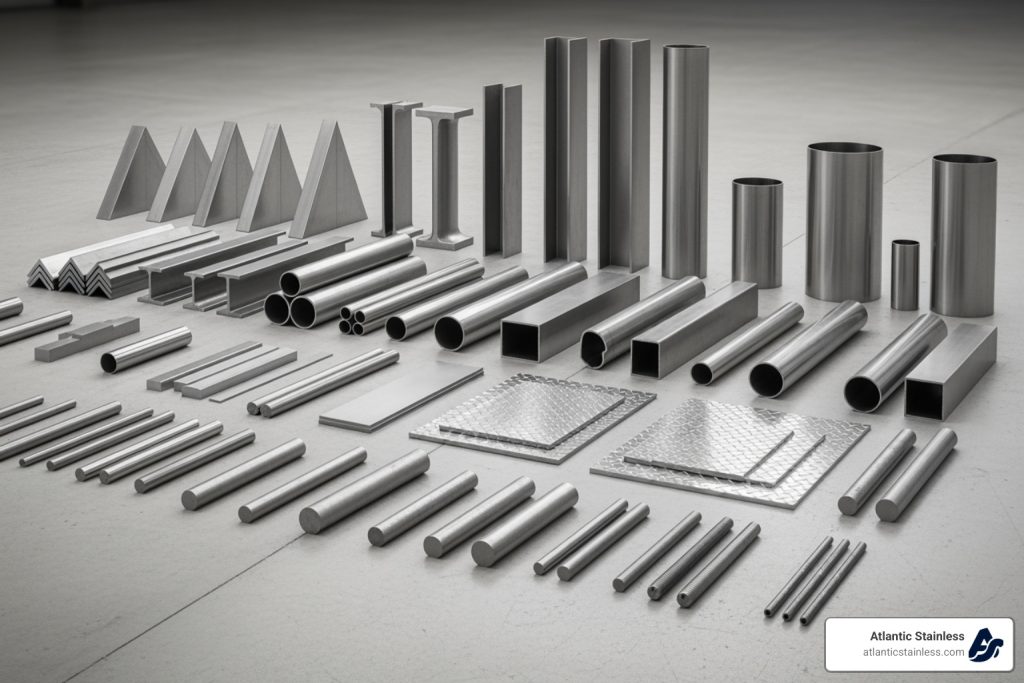
Stainless steel shapes are the structural and functional forms that this versatile alloy takes to meet the demands of construction, manufacturing, and countless industrial applications. From angles and beams to bars and sheets, each shape serves a specific purpose in building everything from chemical plants to kitchen equipment.
The 7 most common stainless steel shapes are:
- Angles (L-Shapes) – for structural support, brackets, and framing
- Beams & Channels – for heavy-duty structural applications and equipment supports
- Bars (Round, Square, Flat, Hex) – solid stock for machining, fasteners, and reinforcements
- Pipes & Tubing – hollow profiles for fluid transport and structural use
- Sheets – thin, flat-rolled material for cladding and panels
- Plates – thicker flat stock for heavy-duty structural applications
- Tees (T-Shapes) – for structural reinforcement and architectural trim
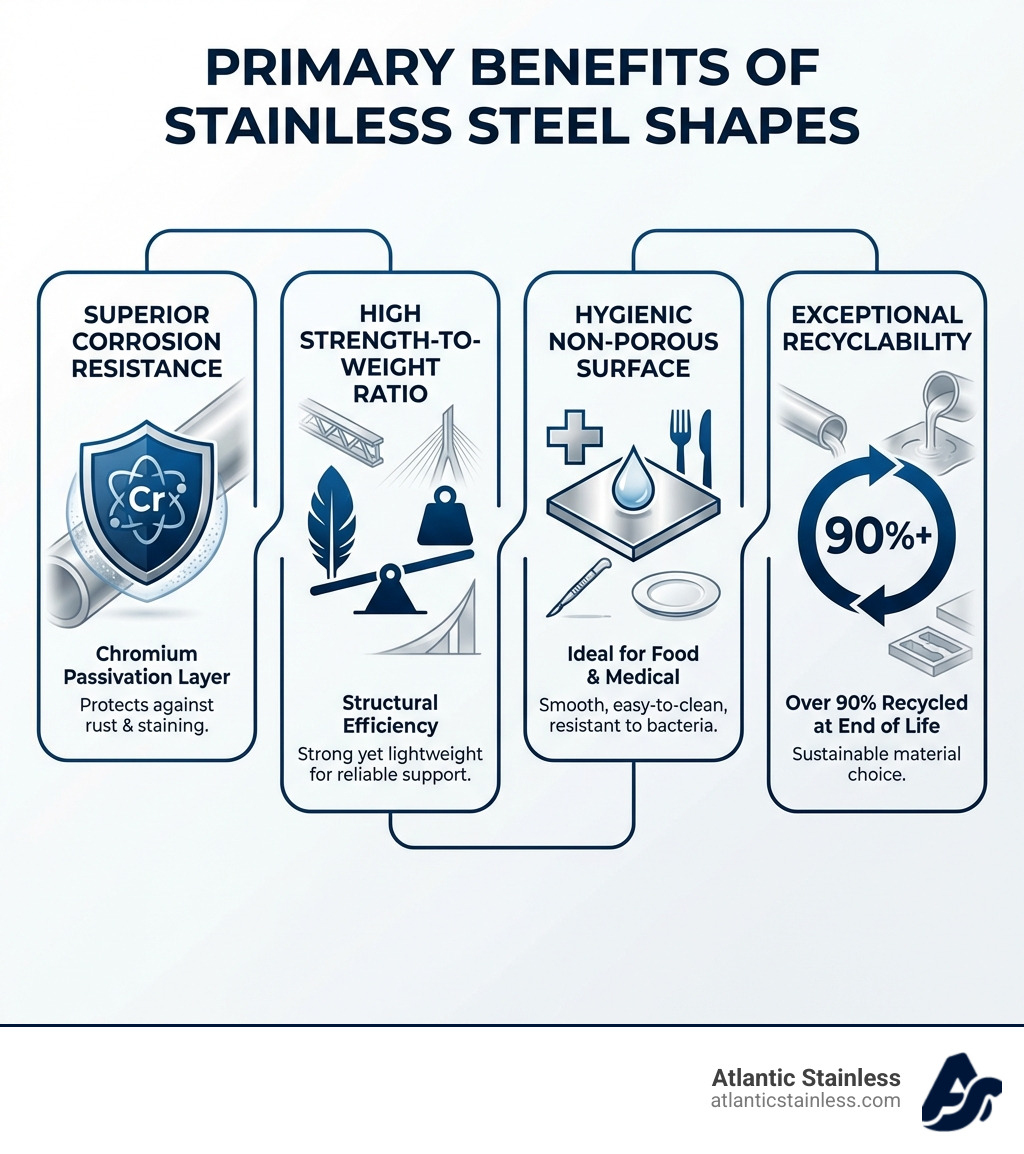
Stainless steel gets its unique properties from a minimum of 10.5% chromium content. This chromium reacts with oxygen to form a thin protective layer called a passivation layer, which gives stainless steel its legendary resistance to corrosion and staining.
The shape you choose matters just as much as the grade. A round bar works perfectly for a shaft or fastener, but you’d need an angle or channel for structural framing. Understanding these shapes helps you specify the right material for your project, whether you’re building a food processing facility or designing architectural features.
Beyond just form, stainless steel shapes offer a combination of strength, hygiene, durability, and sustainability that few other materials can match. With a recycling rate of over 90%, stainless steel is both a practical and environmentally responsible choice.
Why Stainless Steel is the Material of Choice
When it comes to selecting materials for demanding applications, stainless steel consistently stands out. Its unique blend of properties makes it an indispensable choice across a vast array of industries, from the busy kitchens of Boston to the high-tech facilities across the globe. Let’s dig into why stainless steel is so highly regarded.
Corrosion Resistance This is stainless steel’s most celebrated characteristic. Its chromium content forms a passive, self-repairing oxide layer on the surface, acting as a shield against rust and corrosion. Unlike carbon steel, stainless steel doesn’t need coating or painting, which simplifies maintenance and extends its lifespan.
High Strength-to-Weight Ratio Stainless steel offers an impressive strength-to-weight ratio, making it ideal for structural applications that require strong support without excessive mass. This balance is valuable in construction, transportation, aerospace, and marine applications, contributing to overall structural efficiency.
Durability and Long Life-Cycle Stainless steel is exceptionally durable, withstanding harsh environments, extreme temperatures, and rigorous use. Its resistance to wear, abrasion, and corrosion gives it a long life cycle, which reduces replacement and maintenance costs and offers significant economic benefits.
Hygienic Properties In industries where cleanliness is critical—such as food processing, medical, and pharmaceutical manufacturing—stainless steel is the top choice. Its non-porous surface is easy to clean and sanitize, preventing the growth of bacteria and contaminants. This makes it ideal for surgical instruments, hospital infrastructure, and food preparation surfaces. For more on specific grades, see our guide on What is Food Grade Stainless Steel? Guide to SS304.
Aesthetic Appeal Beyond its functional advantages, stainless steel offers a modern, clean, and attractive appearance. Its ability to maintain a pristine finish without corroding or staining makes it a preferred material for architectural design, consumer goods, and kitchen appliances. With various surface finishes available, it can achieve a range of looks, from a brushed matte to a highly polished shine.
Temperature Resistance Stainless steel demonstrates remarkable performance across a wide range of temperatures. Certain grades are engineered to withstand extreme high temperatures, making them suitable for applications like furnace components or exhaust systems. Other grades maintain their integrity and mechanical properties even at very low cryogenic temperatures. For instance, specific alloys like 310 are highly corrosion-resistant in high-heat environments.
Sustainability; High Recyclability Rate In an era of environmental consciousness, stainless steel is a sustainable choice. It is 100% recyclable, and much of its new production comes from recycled content. With a recycling rate over 90%, it minimizes waste and reduces the demand for virgin raw materials, making it an environmentally responsible choice.
The 7 Most Common Stainless Steel Shapes You’ll Encounter
When you think of stainless steel shapes, you might picture a simple sheet or bar. However, the material is far more diverse, with each shape engineered for specific applications. Let’s explore the seven most common forms.
1. Angles (L-Shapes)
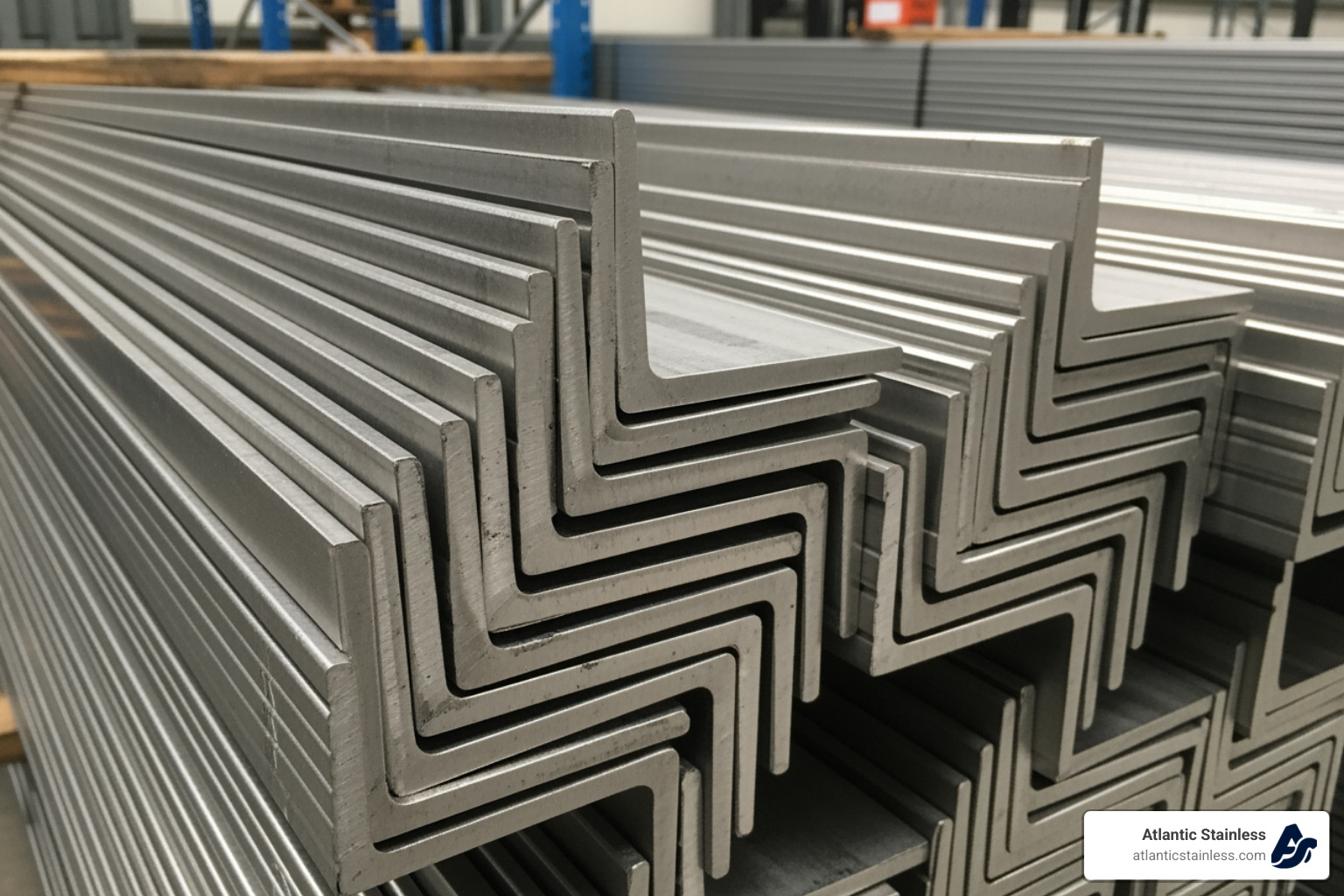
Angles, or L-shapes, are fundamental stainless steel shapes in construction and fabrication. They feature an L-shaped cross-section with two legs meeting at a 90-degree angle. These versatile shapes are available as both Equal Leg Angles and Unequal Leg Angles, offering design flexibility.
Our angles typically range in size from 0.75″ x 0.75″ up to 6″ x 6″, with thicknesses varying from 0.125″ to 0.5″. They are commonly supplied in stock lengths of 20 to 24 feet.
Typical Applications:
- Structural Support: Angles are widely used as structural components in building frames, providing rigidity and support.
- Brackets: Their L-shape makes them perfect for creating strong brackets to connect other elements.
- Framing: From machinery frames to architectural elements, angles offer reliable framing solutions.
- Edge Trims: In hygienic environments like commercial kitchens, medical facilities, and laboratories, stainless steel angles serve as durable and easy-to-clean edge trims.
2. Beams & Channels
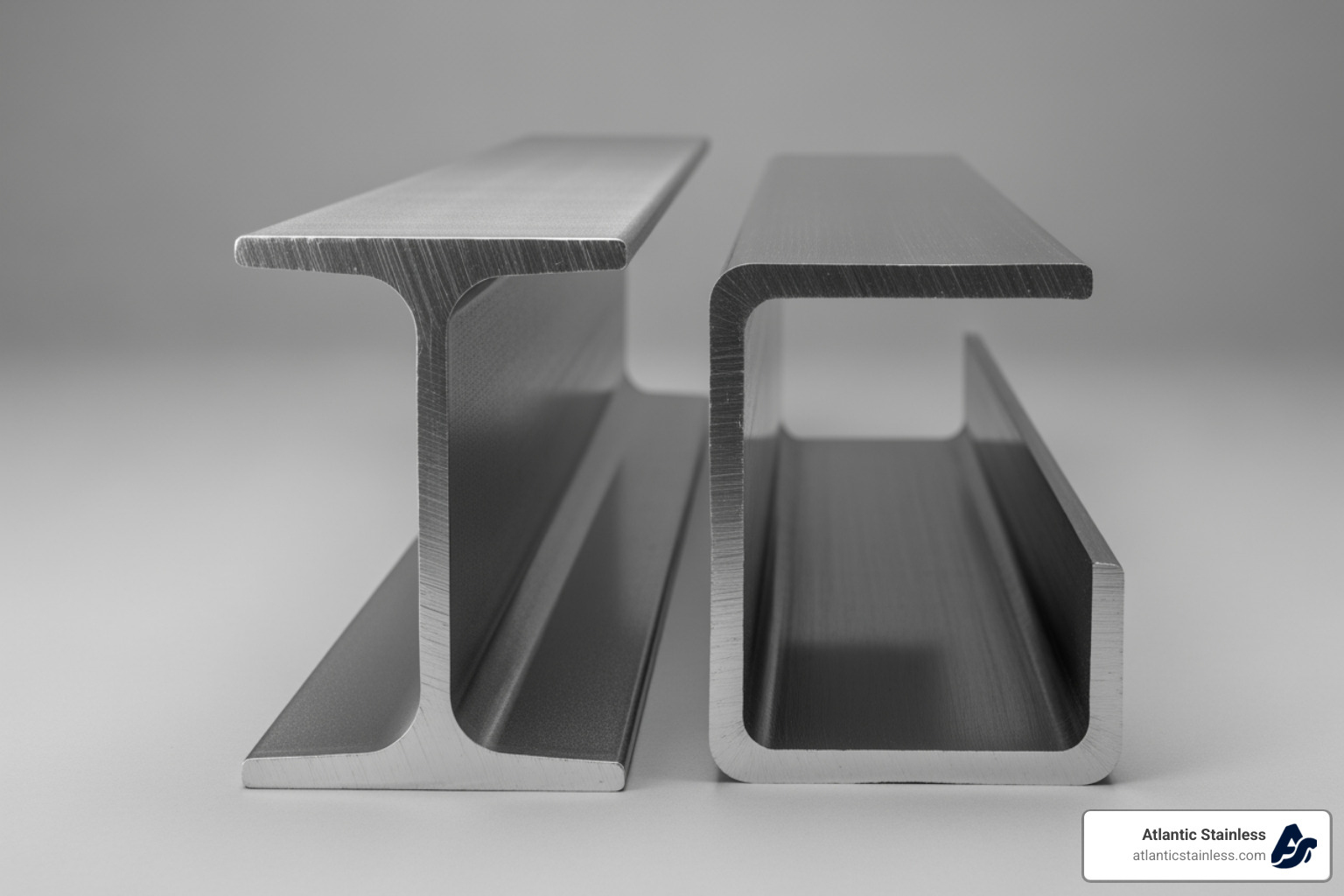
For heavy-duty structural applications, stainless steel shapes like beams and channels are indispensable. They are designed to withstand significant loads and provide robust support.
Beams Beams, particularly I-beams (also known as H-beams or W-beams), are characterized by their distinctive I-shaped cross-section. They are engineered for maximum load-bearing capacity and are available in both S and W configurations, referring to their specific flange and web designs. Beams offer exceptional strength, corrosion resistance, and can be sanitized for use in hygienic conditions. Our beams typically range in depths from 2″ to 8″ and flange widths from 1″ to 2.26″.
Channels Channels, sometimes called C-channels or U-channels, feature a C-shaped or U-shaped cross-section. They are used in structural applications where both strength and corrosion resistance are required. Our channels typically have depths ranging from 3″ to 12.31″ and flange widths from 2.375″ to 4.03″, with standard stock lengths of 20 to 24 feet.
Typical Applications:
- Heavy Structural Support: Both beams and channels form the backbone of many large structures, including building frames and bridges. For more information on structural elements, explore our offerings for Beam and Channel.
- Building Frames: They are crucial in constructing the skeletons of industrial buildings and commercial structures.
- Equipment Supports: Heavy machinery and industrial equipment often rely on stainless steel beams and channels for stable mounting and support.
- Architectural Purposes: Beyond pure utility, their clean lines and corrosion resistance make them suitable for exposed architectural features.
- Medical Equipment: Stainless steel channels are used in the framework of various medical devices due to their hygienic properties.
- Chemical Transport: Specific grades of stainless steel channels (like Type 304) are used for transporting chemicals, pigments, crude oils, and refined oils, thanks to their resistance to corrosive substances.
3. Bars (Round, Square, Flat, Hex)
Bars are a category of solid, versatile stainless steel shapes widely used in manufacturing and construction. Each bar type is distinguished by its cross-sectional geometry, catering to different functional needs.
Round Bars These are solid, cylindrical bars, one of the most common forms of stainless steel. They are often used as raw material for further machining. Our Round Bar products are essential for many industries. Applications: Shafts, fasteners, pins, structural components (beams, column stirrups), pipelines, and roads.
Square Bars Solid bars with a square cross-section, offering excellent strength and a surface that resists rotation or slippage more effectively than round bars. Our Square & Rectangle Tube options provide similar benefits. Applications: Reinforcements, framework, grates, and components requiring reduced slippage in machinery.
Flat Bars Rectangular in cross-section, flat bars are elongated, solid pieces of stainless steel. They are particularly useful when narrower widths and diameters are required. Learn more about our Flat Bar products. Applications: Brackets, supports, bracing, trims, and architectural detailing in the building, petrochemical, and beverage production industries.
Hex Bars Featuring a hexagonal cross-section, hex bars are primarily designed for components that require repeated turning. Our Hex Bar is a prime example. Applications: Bolts, nuts, and other threaded fasteners. They are also common in the medical sector, food processing industry, tooling, and mechanical engineering for their excellent machining qualities.
These various bar shapes serve as fundamental building blocks, often machined into more complex parts, or used directly in applications requiring solid, strong, and corrosion-resistant components.
4. Pipes & Tubing
Pipes and tubing are hollow stainless steel shapes designed for transporting fluids and gases, but they also serve structural roles. While often used interchangeably, pipes are typically larger for fluid conveyance, while tubing is smaller and used for structural, medical, or other specialized applications.
We offer a comprehensive range of Pipe, Tube & Fittings to meet diverse needs. A key consideration when selecting these forms is understanding the manufacturing process; our article on Seamless vs. Welded Tubing: What’s the Difference? provides valuable insights.
Typical Applications:
- Fluid and Gas Transport: Pipelines for water, oil, gas, chemicals, and other industrial fluids.
- Structural Applications: Frameworks, handrails, and supports where a hollow, yet strong, profile is advantageous.
- Medical Equipment: Due to their hygienic properties and corrosion resistance, stainless steel tubing is vital for surgical instruments, medical devices, and pharmaceutical manufacturing equipment.
- Food Processing Lines: Conveying food and beverage products, ensuring sanitation and preventing contamination.
- Construction: Used in various building systems, including plumbing and HVAC.
- Pharmaceutical Industries: Hollow bars and tubing offer excellent corrosion resistance, making them suitable for sensitive pharmaceutical production environments.
5. Sheets
Stainless steel sheets are thin, flat-rolled products known for their versatility. Thicker than foil but thinner than plates, they offer a balance of formability and strength. Our range of Sheet & Plate materials is extensive, and we provide information on Standard Size Stainless Steel Sheets.
Typical Applications:
- Cladding: Used for exterior and interior architectural cladding, providing a durable and aesthetically pleasing finish.
- Kitchen Appliances: The familiar look of stainless steel in refrigerators, ovens, sinks, and countertops comes from sheets.
- Automotive Body Parts: Certain automotive components and decorative trims use stainless steel sheets for their corrosion resistance and appearance.
- Roofing: Durable and weather-resistant roofing materials in industrial and commercial buildings.
- Construction: General fabrication, ductwork, and paneling.
- Food Processing: Surfaces, equipment housing, and containers due to hygiene and ease of cleaning.
- Chemical and Marine Industries: Components requiring good corrosion resistance in these harsh environments.
6. Plates
Plates are thicker versions of sheets, designed for heavy-duty applications requiring superior strength, rigidity, and impact resistance. Our Stainless Steel Plate page offers more details. Selecting the right grade is crucial, and our guide on how to Choose Right Stainless Steel Plate Grade can assist.
Typical Applications:
- Heavy-Duty Applications: Structural bases, heavy machinery components, and industrial equipment.
- Structural Bases: Providing foundational support for large structures and heavy loads.
- Industrial Equipment: Used in tanks, pressure vessels, and various parts of robust industrial machinery.
- Marine Applications: Shipbuilding, offshore platforms, and other marine structures due to excellent resistance to saltwater corrosion.
- Protective and Supportive Roles: Where durability, wear resistance, and high corrosion resistance are paramount, often requiring little maintenance.
7. Tees (T-Shapes)
Tees, or T-profiles, are stainless steel shapes with a T-shaped cross-section. They are typically created by cutting T-shaped profiles or welding two flat bars together. This unique profile offers advantages in specific structural and architectural contexts.
Typical Applications:
- Structural Reinforcement: Used to reinforce other structural elements, adding strength and stability.
- Frames: Lightweight yet strong frames for various assemblies and structures.
- Trims and Edgings: Their clean lines and T-shape make them ideal for decorative trims, edgings, and facades in architectural applications.
- Support Systems: Providing support for panels, glass, or other building materials.
From Mill to Project: Understanding Production and Selection
The journey of stainless steel shapes from raw material to a finished product is a complex one, involving intricate manufacturing processes that profoundly influence their properties and suitability for various applications. Equally important is the careful consideration of selection criteria to ensure the right material is chosen for the job.
How manufacturing impacts stainless steel shapes
The production of stainless steel shapes typically begins with integrated production processes, often starting in electric furnaces. This is followed by refining steps like Argon-Oxygen Decarburization (AOD) or Vacuum-Oxygen Decarburization (VOD) to control chemical composition. The molten steel is then continuously cast into billets or slabs, which are subsequently processed into various shapes.
Key Manufacturing Processes:
- Hot Rolling: This involves shaping stainless steel at high temperatures (above its recrystallization temperature). Hot rolling is typically used to produce larger, simpler shapes like plates, sheets, and structural profiles (angles, beams, channels). It results in a rougher surface finish but is cost-effective for bulk production.
- Cold Rolling: Performed at or near room temperature, cold rolling further reduces the thickness of hot-rolled material and improves its surface finish, dimensional accuracy, and mechanical properties (like strength and hardness). This process is common for sheets, strips, and some bars.
- Laser Fusion: An advanced manufacturing method where individual stainless steel plates are precisely cut and then laser-welded together to form complex structural shapes. This allows for customized dimensions and shapes with excellent dimensional accuracy.
- Annealing: A heat treatment process that involves heating the steel to a specific temperature and then slowly cooling it. This relieves internal stresses, improves ductility, and refines the grain structure, making the steel more workable.
- Pickling: A chemical surface treatment that removes scale and impurities from the steel surface, typically after hot rolling or heat treatment. This process improves corrosion resistance and prepares the surface for further finishing.
- Cutting and Finishing: Various cutting techniques, including plasma, laser, and waterjet cutting, are employed to achieve precise dimensions. Our insights on Waterjet, Plasma, Saw Cutting: What’s the Difference? highlight some of these methods. Finishing processes like polishing or brushing are then applied to achieve desired surface aesthetics and performance.
Impact on Properties: The manufacturing process directly influences the final characteristics of stainless steel shapes:
- Surface Finish: Hot-rolled products have a rougher finish, while cold-rolled and polished products offer smoother, more aesthetic surfaces.
- Dimensional Accuracy: Cold rolling and laser fusion generally yield tighter dimensional tolerances and superior shape accuracy compared to hot rolling.
- Mechanical Properties: Cold working increases strength and hardness, while annealing improves ductility and toughness.
- Weldability: Certain processes and grades, like super low-carbon versions (e.g., 304L, 316L), are specifically designed to prevent intergranular corrosion, making them suitable for welded applications.
Understanding these processes helps us appreciate the technical specifications and data provided by manufacturers, which are crucial for engineering calculations and structural design. For comprehensive details, referring to Technical specifications for structural shapes is often necessary.
Key considerations for selecting stainless steel shapes
Choosing the appropriate stainless steel shapes for a project is a critical decision that impacts performance, longevity, and cost. It requires a thorough understanding of the project’s specific requirements and the properties of different stainless steel grades. We’ve even put together a comprehensive Stainless Steel Material Selection Guide to help steer these choices.
Project Requirements:
- Load-Bearing Capacity: For structural components like beams, channels, and angles, the mechanical properties such as yield strength, tensile strength, and section modulus are paramount. These determine how much load the shape can safely bear.
- Environmental Factors: The operational environment dictates the required level of corrosion resistance. Factors like exposure to moisture, chemicals (especially chlorides), high temperatures, or abrasive conditions must be considered.
- Aesthetic Needs: For visible components in architectural or consumer product applications, surface finish and visual appeal play a significant role.
- Fabrication Needs: Ease of welding, forming, or machining can influence the choice of shape and grade.
Alloying Elements: The specific elements added to the iron-chromium base significantly alter stainless steel’s properties.
- Chromium: The defining element, providing corrosion resistance.
- Nickel: Improves ductility, toughness, and corrosion resistance, especially in austenitic grades.
- Molybdenum: Greatly improves resistance to pitting and crevice corrosion, particularly in chloride-rich environments (e.g., 316 stainless steel).
- Carbon: Increases hardness and strength but can reduce weldability and corrosion resistance in certain conditions.
- Other elements: Titanium, Niobium, Manganese, and Copper also contribute specific characteristics.
Stainless Steel Families: Stainless steels are broadly categorized into five main families, each with distinct characteristics:
- Austenitic (300 series): This is the most common family (e.g., 304, 316, 321). They are highly corrosion-resistant, ductile, and generally non-magnetic. Their excellent formability and weldability make them suitable for a vast array of applications, from kitchenware to chemical processing.
- Ferritic (400 series): These grades (e.g., 409, 430) are magnetic and offer good corrosion resistance, especially in mild environments. They are less ductile than austenitic grades but are typically more cost-effective.
- Martensitic: Known for their high strength and hardness, these grades (e.g., 410, 416) can be heat-treated to achieve various strength levels. They are magnetic and offer moderate corrosion resistance.
- Duplex: Combining properties of both austenitic and ferritic steels (e.g., 2205), duplex stainless steels offer superior strength and excellent resistance to stress corrosion cracking, making them ideal for aggressive environments.
- Precipitation-Hardening (PH): These grades (e.g., 17-4 PH) can be strengthened through heat treatment, achieving very high strength and hardness while maintaining good corrosion resistance.
Understanding these families and their specific grades is crucial. For a deeper dive into the characteristics of various grades, you might find our article on Comparing Popular Steel Grades particularly useful. By carefully evaluating these factors, we ensure that the chosen stainless steel shapes will perform optimally throughout their service life.
Frequently Asked Questions About Stainless Steel
Even for seasoned professionals, some questions about stainless steel properties pop up regularly. Let’s tackle a few common ones to clear up any confusion.
Is all stainless steel magnetic?
This is a classic question, and the simple answer is no! While many people assume all steel is magnetic, stainless steel is a bit more nuanced. The magnetic properties of stainless steel largely depend on its microstructure, which is determined by its alloying elements.
- Austenitic stainless steel (like the popular 300 series grades such as 304 and 316) contains a high percentage of nickel, which stabilizes the austenitic microstructure. This makes these grades generally non-magnetic or only very weakly magnetic. You might notice a slight attraction with a strong magnet, especially if the material has been cold-worked, but it won’t be a strong pull.
- Ferritic stainless steel (such as 400 series grades like 430 and 409) and Martensitic stainless steel (like 410 and 416) have a different microstructure. These grades are magnetic because they contain less nickel and more chromium, which leads to a ferritic or martensitic structure.
- Precipitation-Hardening (PH) stainless steels (like 17-4 and 15-5) are also magnetic.
So, if your magnet sticks firmly to a piece of stainless steel, it’s likely a ferritic, martensitic, or PH grade. If it barely sticks or not at all, it’s probably an austenitic grade.
What is the difference between 304 and 316 stainless steel?
Grades 304 and 316 are the two most common austenitic stainless steel shapes you’ll encounter, and while they share many similarities, a key difference sets them apart.
- Grade 304: This is the most widely used general-purpose stainless steel. It offers excellent corrosion resistance in a broad range of atmospheric and chemical environments. It’s known for its good formability and weldability, making it suitable for kitchen equipment, architectural panels, and many industrial applications.
- Grade 316: The primary distinction for Grade 316 is the addition of molybdenum (typically 2-3%). This alloying element significantly improves its corrosion resistance, particularly against chlorides, salt water, and other acidic or aggressive chemicals. This makes 316 stainless steel the preferred choice for marine environments, chemical processing plants, and medical implants, where 304 might eventually show signs of corrosion. Our article on the Differences: 316 Straight Grade vs. 316L Stainless Steel dives deeper into these nuances.
While 316 is often considered “superior” in terms of corrosion resistance, it’s also typically more expensive. For many applications, 304 provides perfectly adequate performance at a more economical price point. The choice between them depends entirely on the specific demands of your project’s environment.
Can stainless steel rust?
Despite its name, it’s a common misconception that stainless steel can never rust. While it is highly corrosion-resistant, the reality is that stainless steel can rust or corrode under certain conditions.
The magic of stainless steel lies in its passivation layer, a thin, self-repairing chromium oxide film that forms on its surface. This layer protects the underlying steel from oxidation and corrosion. However, if this passivation layer is damaged or overwhelmed, corrosion can occur.
Common scenarios where stainless steel might corrode include:
- Exposure to Chlorides: Prolonged contact with chlorides (found in salt water, some cleaning agents, and certain chemicals) can break down the passivation layer, leading to pitting or crevice corrosion, especially in grades like 304. This is why 316 stainless steel, with its molybdenum content, is preferred for marine environments.
- Lack of Oxygen: In environments where oxygen is scarce, the passivation layer cannot readily reform if damaged. This can happen in tight crevices or under deposits.
- Mechanical Damage: Scratches or abrasions can temporarily remove the passivation layer. While it usually reforms, if corrosive agents are present during this time, localized corrosion can occur.
- Contamination: Contact with carbon steel or other reactive metals can lead to galvanic corrosion or iron contamination, which can cause surface rust.
The key takeaway is that while stainless steel is remarkably durable and resistant, proper grade selection for the specific environment and good maintenance practices are essential to ensure its long-term performance and prevent unexpected corrosion.
Your Partner for High-Quality Stainless Steel
We’ve explored the incredible versatility and resilience of stainless steel shapes, from the robust angles and beams that form the backbone of structures to the hygienic sheets and pipes essential for critical industries. Each shape, crafted with precision and purpose, plays a vital role in our modern world, offering best durability, corrosion resistance, and aesthetic appeal.
Choosing the right stainless steel shape and grade is paramount for the success and longevity of any project. It’s about understanding the nuances of material properties, manufacturing processes, and the specific demands of your application. This informed decision-making ensures optimal performance and cost-effectiveness.
At Atlantic Stainless, we pride ourselves on being your trusted, nationwide supplier and processor of high-quality stainless steel and high-temperature alloys. Located in North Attleboro, Massachusetts, we combine extensive industry experience with a vast inventory and state-of-the-art processing capabilities. Our commitment to prompt delivery and best service ensures that you get the exact stainless steel shapes you need, when you need them. Whether you require standard shapes or custom-fabricated components, our team is equipped to provide custom solutions.
We invite you to experience the Atlantic Stainless difference. Let us help you select the perfect stainless steel solutions for your next endeavor. To find more about our capabilities and how we can support your project, we encourage you to Explore our full range of custom stainless steel rings, discs, and shapes.