Stainless Steel Pipe & Tubing: Decoding Lengths for 10ft, 20ft, and Beyond
What to Know Before Buying 1/2″ Stainless Steel Tubing in 20 Ft Lengths
1 2 “stainless steel tubing in 20 ft lengths is one of the most practical stocking sizes for industrial, architectural, and process piping work—and knowing exactly what to order before you buy saves time, money, and headaches.
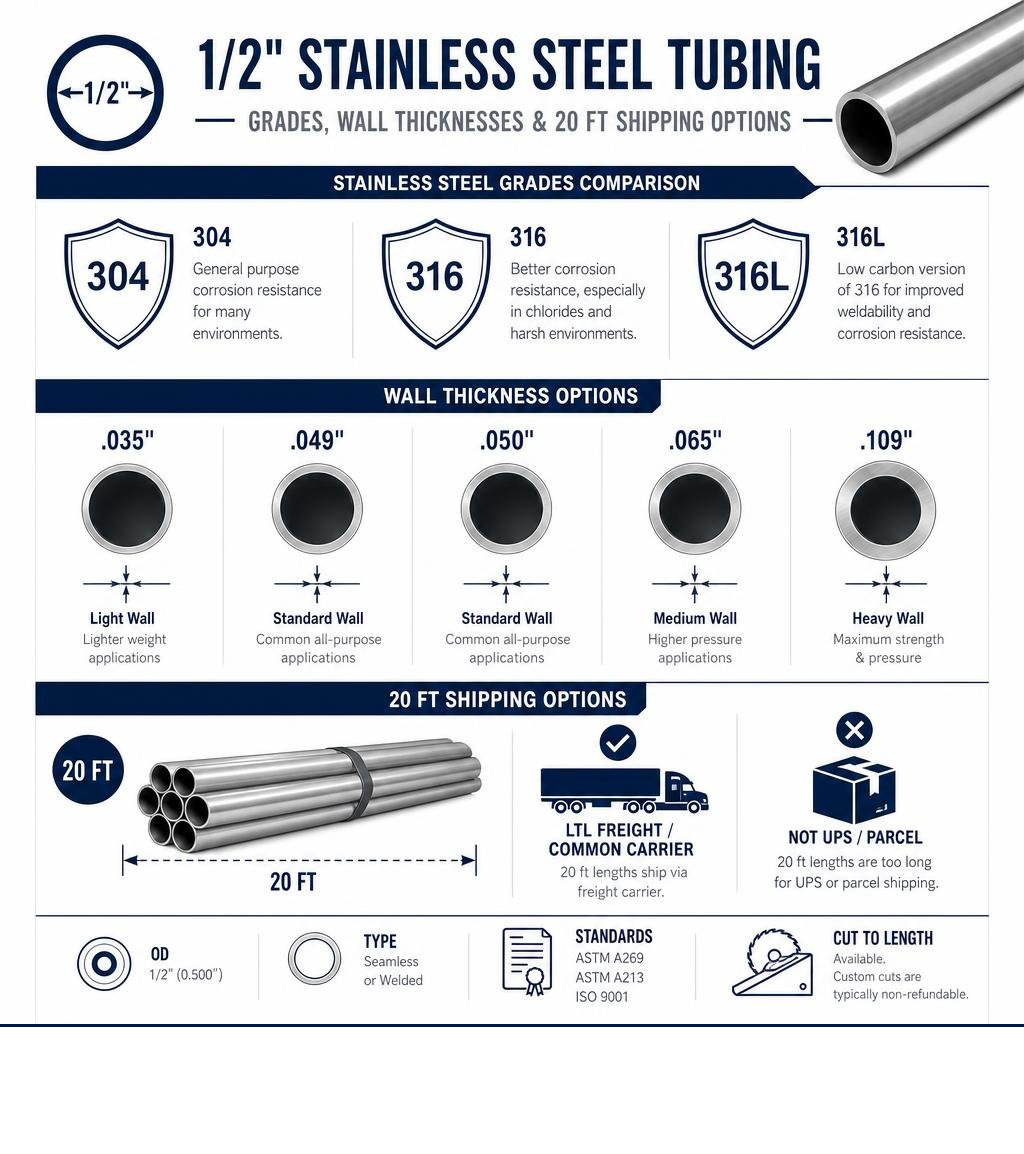
Here’s a quick-reference breakdown of the most important specs buyers search for:
| Spec | Common Options |
|---|---|
| OD | 1/2″ (0.500″) |
| Wall Thickness | .035″, .049″, .050″, .065″, .109″ |
| Grade | 304, 316, 316L |
| Type | Seamless or Welded |
| Standards | ASTM A269, ASTM A213, ISO 9001 |
| Shipping | LTL freight / common carrier (not UPS) |
| Cut-to-Length | Available, but custom cuts are typically non-refundable |
A few things stand out about this size and length combination:
- 20 ft is a standard “stick” length — the full mill length most suppliers stock
- 1/2″ OD tubing is measured by outside diameter, not inside (that’s what separates tubing from pipe)
- Grade and wall thickness drive both price and suitability for your application
- 20 ft lengths cannot ship via UPS — they require a common carrier or LTL freight
Whether you’re sourcing for instrumentation lines, hydraulic systems, food processing equipment, or architectural railings, the sections below cover everything you need to specify and source this product with confidence.
Sourcing and Specifying 1 2 Stainless Steel Tubing 20 Ft
When you are sourcing 1 2 stainless steel tubing 20 ft sections, you are selecting a highly versatile, rigid component. However, “half-inch stainless tubing” is not a single product. To get exactly what your system requires, you must specify the manufacturing method, the alloy grade, and the precise wall thickness.
Seamless vs. Welded 1 2 Stainless Steel Tubing 20 Ft
The choice between seamless and welded tubing is one of the first and most critical decisions you will make. This choice dictates how much pressure your system can handle and how the tubing will behave when bent or flared.
- Seamless Tubing: Created by extruding a solid billet of steel over a mandrel, seamless tubing has no longitudinal weld seam. This extrusion process yields a highly uniform microstructure, allowing the tube to handle significantly higher working pressures and withstand extreme environments without the risk of seam failure.
- Welded Tubing: Produced by roll-forming a flat strip of stainless steel and welding the seam longitudinally. While modern welding techniques make these seams incredibly strong, welded tubing generally carries a lower pressure rating than its seamless counterpart. However, it is highly cost-effective and ideal for structural, decorative, or low-pressure fluid-transfer jobs.
To understand how these two types are manufactured in greater detail, you can read about How Stainless Steel Tubing is Made or explore our breakdown on Seamless vs Welded Tubing: What’s the Difference to determine which suits your pressure requirements.
| Feature | Seamless Tubing | Welded Tubing |
|---|---|---|
| Presence of Seam | None (Extruded) | Longitudinal weld bead |
| Pressure Rating | Very High (Ideal for hydraulics) | Moderate (Standard fluid transfer) |
| Dimensional Tolerance | Slightly broader wall tolerance | Extremely consistent wall thickness |
| Bending & Flaring | Excellent; uniform performance | Good, but weld line must be monitored |

Common Grades and Wall Thicknesses for 1/2″ Tubing
The chemistry of your steel determines how well it will fight off rust, chemicals, and high temperatures. In 1/2″ OD tubing, two austenitic grades reign supreme:
- Grade 304: The workhorse of the stainless family. It offers excellent weldability, good formability, and reliable corrosion resistance for standard industrial environments, architectural projects, and food service.
- Grade 316 / 316L: The upgrade choice. By adding molybdenum to the mix, 316 stainless steel gains superior resistance to chlorides (like saltwater or road salt) and harsh chemicals. The “L” denotes low carbon, which helps prevent carbide precipitation during welding, ensuring the welded joints stay as corrosion-resistant as the rest of the tube.
Once you have selected your grade, you must pair it with the correct wall thickness. The wall thickness determines the inside diameter (ID) and the overall strength of your 1 2 stainless steel tubing 20 ft stick.
Common wall thickness options include:
- .035″ Wall: Often used in lighter-duty applications, such as standard 1/2″ seamless 304 stainless steel instrumentation lines.
- .049″ or .050″ Wall: A highly popular middle ground. For example, a 1/2″ OD x .050″ wall polished Grade 304 stainless steel tube is a common standard for architectural rails, bar foot rails, and commercial fittings.
- .065″ Wall: A heavy-duty wall option designed for high-pressure hydraulic setups and demanding process lines, such as 1/2″ seamless Grade 316 stainless steel configurations.
To see how these options are processed and sized, check out how Stainless Steel Tubing Produced specifications are maintained across different alloy families.
Industry Standards and Certifications for 1/2″ OD Tubing
You do not want to guess whether your tubing will hold up under pressure or in sterile environments. That is why industry standards exist. When purchasing your 20-foot sections, look for these vital certifications. For general background on consensus material standards, you can also review information from ASTM International, the standards organization behind many commonly referenced metal specifications.
- ASTM A269: The standard specification for seamless and welded austenitic stainless steel tubing for general service. This guarantees the tubing has been tested for dimensional tolerances, chemistry, and structural soundness.
- ASTM A213: Specifically for seamless ferritic and austenitic alloy-steel boiler, superheater, and heat-exchanger tubes, ensuring high-temperature performance.
- ISO 9001: Confirms that the manufacturer adheres to strict, internationally recognized quality management systems.
- ASME BPE: Vital for pharmaceutical and biotechnology applications. This standard requires specific surface finishes, such as electropolished interior diameters (ID), to prevent bacterial growth and ensure easy sanitization.
Purchasing, Applications, and Logistics
Sourcing the right material is only half the battle. Getting 20-foot rigid metal sticks from our warehouse to your facility requires some logistical planning.
Key Applications for 1 2 Stainless Steel Tubing 20 Ft
A 20-foot length of 1/2″ OD tubing is incredibly adaptable. Because stainless steel is highly hygienic, strong, and resistant to environmental wear, you will find it utilized across several diverse industries:
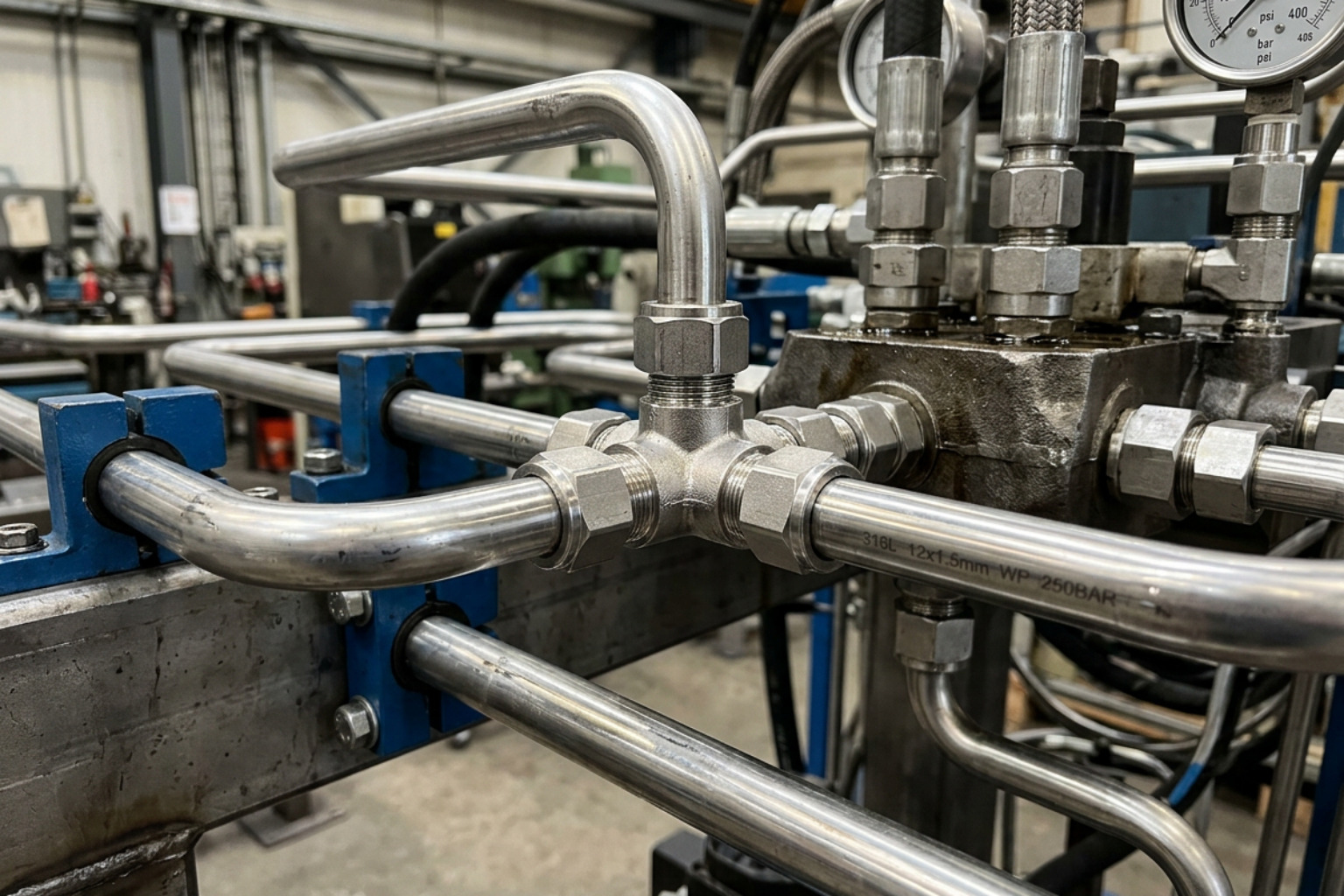
- Hydraulic & Instrumentation Lines: High-pressure seamless lines carry fluids and gases safely to control panels and machinery.
- Architectural Railings & Handrails: Polished or brushed tubing is a favorite for guardrails, foot rails, and modern safety systems.
- Food & Beverage Processing: Easily sanitized and highly corrosion-resistant, these tubes safely transport ingredients without contaminating the product.
- Marine Environments: Grade 316 tubing is standard on boats and offshore rigs to withstand constant exposure to saltwater.
For a deeper dive into how these tubes are integrated into various systems, read about Stainless Steel Tubing Many Applications or explore how custom systems utilize SS Tubing Fittings Custom Application designs.
Pricing, Shipping, and Logistics for 20-Foot Sticks
When ordering 20-foot lengths, shipping is the most critical logistical factor to consider.
Because a 20-foot stick exceeds the maximum length limits set by standard parcel carriers like UPS or FedEx, it cannot ship via standard parcel services. Instead, full 20-foot lengths must ship via LTL (Less-Than-Truckload) freight or common carrier.
LTL freight requires a commercial delivery address capable of receiving a large tractor-trailer. If you are shipping to a residential area or a job site without a loading dock or forklift, you will need to arrange for a liftgate service or plan to hand-unload the shipment.
Pricing for these shipments varies based on:
- Material Grade: 316 stainless steel is more expensive than 304 due to its molybdenum content.
- Wall Thickness: Thicker walls mean more metal per foot, which increases the weight and raw material cost.
- Manufacturing Method: Seamless tubing generally commands a premium over welded tubing due to the complex extrusion process.
If you are looking for specific aesthetic finishes for architectural projects, you can browse brushed stainless steel tubing options to see how polished finishes are packaged and shipped.
Cut-to-Length Services and Return Policies
What if you do not actually need a continuous 20-foot piece, but you want to take advantage of bulk pricing? Or what if your shop lacks the heavy-duty cutting tools to make clean, square cuts on-site?
At Atlantic Stainless, we offer comprehensive cut-to-length processing services. We can cut your 20-foot sticks down to precise custom lengths before shipping.
- The Shipping Advantage: Cutting a 20-foot stick into shorter sections (such as two 10-foot pieces or four 5-foot pieces) often allows the shipment to qualify for standard ground parcel shipping, dramatically reducing your freight costs.
- The Fine Print: It is important to note that while we are happy to customize your order, custom cut-to-length tubing is non-refundable. Standard, uncut 20-foot sticks can typically be returned within a set window (subject to restocking fees), but once a tube is cut to your custom specifications, it cannot be returned.
Always double-check your measurements and fitting compatibility before placing a custom-cut order. If you are ready to explore our full inventory of piping, tubing, and matching connection components, please check out our Products Pipe Tube Fittings page to find the exact configuration for your next project.