A Quick Start Guide to Stainless Steel Sheet Plate
What Is Stainless Steel Sheet & Plate — and Which Do You Need?
Last updated on July 8th, 2026 at 01:32 pm
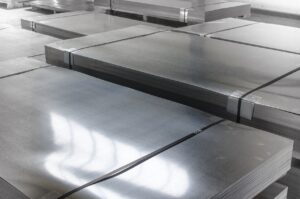
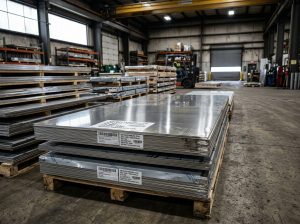
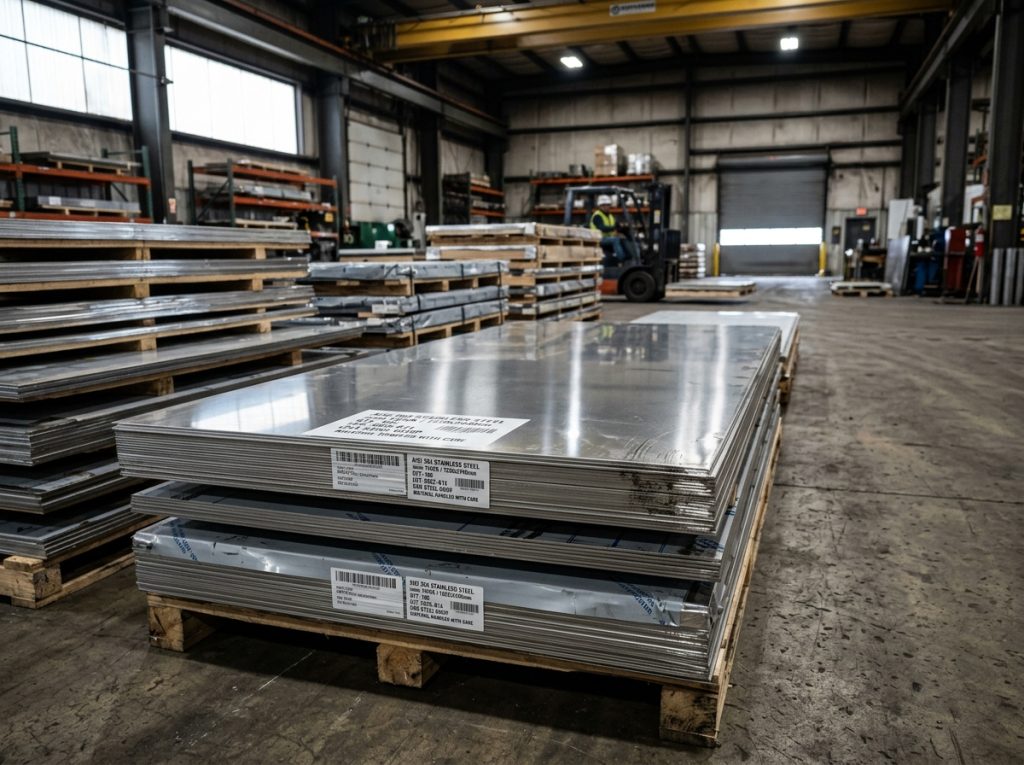
Stainless steel sheet & plate is one of the most widely used forms of stainless steel, found in everything from commercial kitchens and hospital equipment to marine hardware and architectural cladding.
Here’s a quick breakdown to help you find what you need:
| Feature | Stainless Steel Sheet | Stainless Steel Plate |
|---|---|---|
| Thickness | Generally under 6mm (up to ~3/16″) | Typically 6mm (3/16″) and thicker |
| Common Grades | 304, 316, 430 | 304/304L, 316/316L, 17-4 PH |
| Common Finishes | 2B, #4 Brushed, #8 Mirror | HRAP, 2B, #4 Polished |
| Typical Uses | Appliances, food processing, cladding | Structural, marine, heavy industrial |
| How Sold | By gauge or mm, standard or cut-to-size | By inch thickness, custom cut |
The key difference between the two comes down to thickness and application. Sheets are thinner and more flexible in use. Plates are thicker and built for heavy-duty structural or industrial demands.
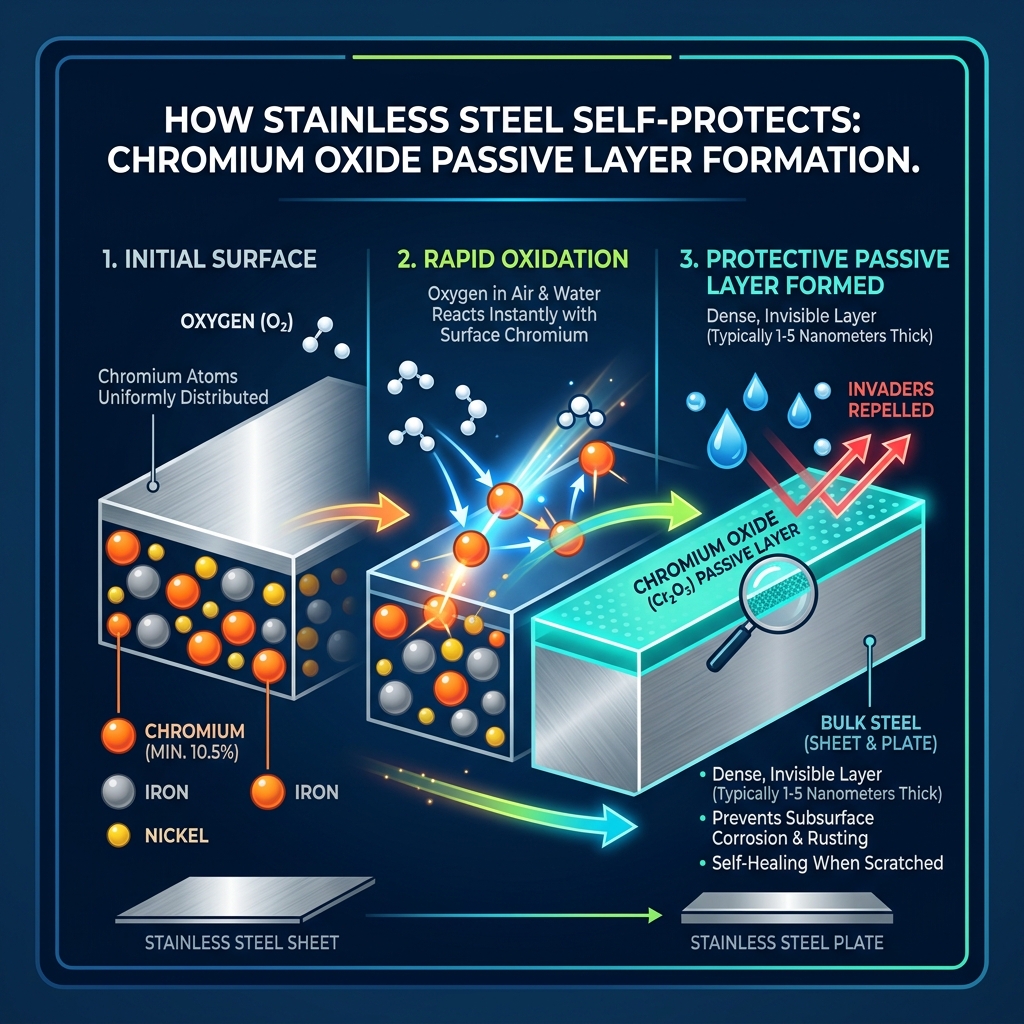
Both are made from iron alloyed with a minimum of 10.5% chromium. That chromium content is what makes stainless steel special — it reacts with oxygen in the air to form a thin, invisible protective oxide layer on the surface. This passive layer is what gives stainless steel its signature resistance to rust, staining, and corrosion.
Whether you’re sourcing material for a food processing line, a marine installation, or a precision manufacturing project, choosing the right grade, thickness, and finish makes a significant difference in performance and longevity.
Understanding Stainless Steel Sheet & Plate Specifications
When you start looking into stainless steel sheet & plate, the technical jargon can feel a bit like learning a second language. But don’t worry—we’re here to translate. At its core, the manufacturing of these materials involves rolling raw steel through heavy industrial rollers.
Hot-rolled material is processed at very high temperatures. This is typically how thicker plates are made. The result is a slightly scaled surface, often referred to as HRAP (Hot Rolled, Annealed, and Pickled). On the flip side, cold-rolled material is processed at room temperature. This extra step allows for much tighter tolerances and a smoother, more attractive surface finish, which is why most thin sheets are cold rolled.
One of the most important things to understand is the measurement system. While the rest of the world uses millimeters, the U.S. metal industry often uses the “gauge” system for sheet metal. Here’s the tricky part: the higher the gauge number, the thinner the metal. For example, a 24-gauge sheet is only about 0.024 inches thick, while a 7-gauge sheet is a beefy 0.179 inches. Once you cross over that 3/16″ threshold, we stop talking about gauges and start talking about fractional or decimal inches (like 1/4″, 1/2″, or even 6″ thick plate).
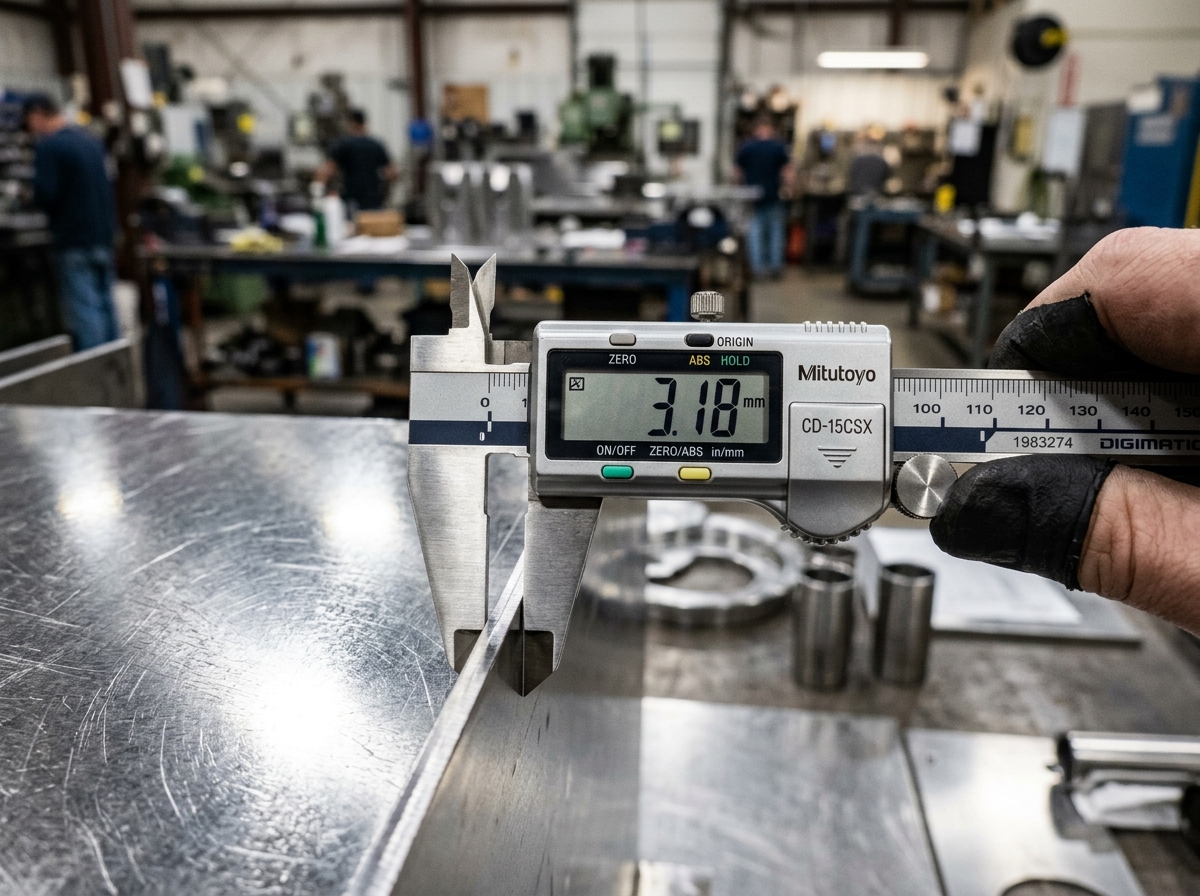
To help you decide which material fits your mechanical needs, take a look at the typical properties of the two heavy hitters in the industry:
| Property | 304 Stainless Steel | 316 Stainless Steel |
|---|---|---|
| Tensile Strength (psi) | 85,000 | 80,000 |
| Yield Strength (psi) | 34,000 | 30,000 |
| Brinell Hardness | 170 | 160 |
| Elongation (%) | 45% | 50% |
| Magnetism | Non-magnetic (may become slightly magnetic when worked) | Non-magnetic |
Ready to see what we have in stock? Explore Our Stainless Steel Sheet & Plate Products to see the full range of sizes and alloys available for your next project.
Common Grades of Stainless Steel Sheet & Plate
Not all stainless steel is created equal. Choosing the right “flavor” (or grade) is the most critical decision you’ll make.
- 304/304L: The “bread and butter” of the industry. It is the most popular and economical grade. It offers excellent corrosion resistance for most indoor and light outdoor applications. The “L” stands for low carbon, which makes it better for welding because it prevents “carbide precipitation” (essentially, it keeps the metal from getting “sick” or brittle at the weld seams).
- 316/316L: The “Marine Grade.” This alloy contains molybdenum, which gives it a significant boost in resistance to chlorides (such as salt water) and industrial chemicals. If your project is near the ocean or in a chemical plant, this is your go-to.
- 430 Grade: A ferritic grade commonly used for decorative trim and kitchen appliances. It’s magnetic and offers good heat resistance, though it isn’t quite as corrosion-resistant as the 300-series.
- 17-4 PH: This is a precipitation-hardening grade. It’s the “tough guy” of the group, offering high strength and hardness along with excellent corrosion resistance. It’s frequently used in aerospace and high-stress industrial parts.
If you’re still on the fence, we have some great resources to help you Choose the Right Stainless Steel Plate Grade. We also carry specialty options like 303 Stainless Steel Plate for projects requiring high machinability and Alloy 20 Stainless Steel Plate for extreme sulfuric acid environments.
Surface Finishes for Stainless Steel Sheet & Plate
The finish isn’t just about looking pretty—though that’s a nice perk! The surface finish affects how easy the metal is to clean and how it resists corrosion.
- 2B Mill Finish: This is the standard “dull” finish you’ll see on most industrial sheets. It’s smooth but not reflective. It’s the most economical choice if the appearance isn’t the top priority.
- #4 Brushed (Satin): This is what you see on most kitchen appliances and elevators. It has a visible “grain” or “brush strokes.” It’s great for hiding fingerprints and scuffs in high-traffic areas.
- #8 Mirror: This is polished to a high shine, essentially acting like a mirror. It’s used for decorative architecture and clean-room applications where a perfectly smooth surface prevents bacteria from hiding.
Understanding how these finishes are achieved—from the raw mill to the final polish—is a fascinating journey. You can dive deeper into the process in our article From Mill to Masterpiece: Exploring Hot and Cold Rolled Stainless Steel Sheets.
Industrial Applications and Benefits
Why do industries choose stainless steel sheet & plate over cheaper alternatives like carbon steel? It comes down to the “Triple Threat”: Strength, Hygiene, and Longevity.
- Food Processing: Because it doesn’t harbor bacteria and withstands harsh cleaning chemicals, stainless steel is the law of the land in dairies, breweries, and commercial kitchens.
- Marine Environments: 316 stainless resists the “pitting” that salt water causes in other metals, making it essential for boat hardware and coastal construction.
- Medical Equipment: From surgical instruments to hospital beds, the non-reactive nature of stainless steel ensures patient safety and easy sterilization.
- Architecture: Designers love the aesthetic appeal and the fact that it won’t rust and streak down the side of a building.
The mechanical properties, such as high tensile strength and impressive heat resistance, allow these materials to perform in environments that would melt or snap other metals. Discover Our Stainless Steel Sheet & Plate Solutions to find the material that meets your industry’s specific standards.
Sourcing and Customization for Your Project
Finding the right metal is only half the battle; getting it in the right shape and size is where the real work begins. At Atlantic Stainless, we don’t just hand you a standard 4′ x 8′ sheet and wish you luck. We are a full-service processor.
Whether you need a single custom-cut piece for a home backsplash or a thousand precision parts for an industrial assembly, we have the equipment to handle it. Sourcing from a reliable supplier ensures you get material traceability (MTRs), so you know exactly what’s in your steel.
Before you buy, it’s worth reading up on What to Look for in Stainless Steel Plate Suppliers and checking out our Consumers Guide to Purchasing Stainless Steel Sheets. We pride ourselves on offering a massive inventory of Stainless Steel Plate ready for immediate processing.
Measuring Thickness: Gauge vs. Decimal
Precision is everything in manufacturing. If you tell a fabricator you need “thin steel,” you might end up with something that flops like a noodle or something you can’t bend. That’s why we use gauge charts and decimal measurements.
For example, 16-gauge stainless steel is approximately 0.060 inches thick. However, because different metals (like aluminum vs. steel) use different gauge scales, it is always safest to specify the decimal thickness in inches or millimeters. This eliminates any “oops” moments during the build.
Standard sizes for stainless steel sheet & plate often include 48″ x 96″, 48″ x 120″, or 60″ x 120″. However, we know that projects rarely come in “standard” sizes. You can learn more about what’s typically available in our guide to Standard Size Stainless Steel Sheets.
Processing Services and Custom Fabrication
Why spend your own time and wear out your tools trying to cut stainless steel? It’s a notoriously tough material that requires specialized equipment. We offer several ways to get your metal “ready to use”:
- Shearing: Best for straight cuts on thinner sheets (up to 3/8″ thick). It’s fast and cost-effective.
- Plasma Cutting: Ideal for thicker plates where you need a specific shape but don’t require surgical precision.
- Waterjet Cutting: The gold standard for precision. It uses high-pressure water mixed with abrasive garnet to cut through plates up to 6 inches thick without creating a “heat-affected zone” that could change the metal’s properties.
- Laser Cutting: Perfect for intricate designs and thin-to-medium gauges with incredibly tight tolerances.
The best part? We have no minimum orders. Whether you need one small disc or a truckload of plates, we treat every order with the same level of care. You can view our full range of Sheet & Plate options and processing services online.
Conclusion and Next Steps
Selecting the perfect stainless steel sheet & plate doesn’t have to be a headache. By considering your environment (will it get wet?), your structural needs (how heavy is the load?), and your aesthetic goals (do you want it to shine?), you can narrow down the thousands of options to the one perfect choice.
Remember:
- 304 for general use; 316 for salt and chemicals.
- Sheet for light work; Plate for heavy lifting.
- Gauge for thin; Inches for thick.
At Atlantic Stainless, we’ve spent decades helping people in New England and across the globe find the right metal for the job. Our team in North Attleboro is ready to help you navigate the specs, the grades, and the cuts.
Ready to get your project moving? Request a Quote for Stainless Steel Sheet & Plate today, and let’s build something that lasts!