C Channel Dimensions and Size Chart Guide
What Is a C Channel Size Chart and Why It Matters for Your Project
A c channel size chart is a reference table that lists the standard dimensions, weights, and structural properties of C-shaped steel or metal profiles — giving engineers and fabricators the exact data they need to select the right piece for any structural job.
Here are the most common standard C channel sizes at a glance:
| Designation | Depth (in) | Flange Width (in) | Web Thickness (in) | Weight (lb/ft) |
|---|---|---|---|---|
| C3 x 4.1 | 3.00 | 1.410 | 0.170 | 4.1 |
| C4 x 4.5 | 4.00 | 1.584 | 0.180 | 4.5 |
| C5 x 6.7 | 5.00 | 1.750 | 0.190 | 6.7 |
| C6 x 8.2 | 6.00 | 1.920 | 0.200 | 8.2 |
| C8 x 11.5 | 8.00 | 2.260 | 0.220 | 11.5 |
| C10 x 30 | 10.00 | 3.033 | 0.673 | 30.0 |
| C12 x 20.7 | 12.00 | 2.942 | 0.282 | 20.7 |
| C15 x 50 | 15.00 | 3.716 | 0.716 | 50.0 |
How to read it: A designation like C12 x 20.7 means the channel is 12 inches deep and weighs 20.7 pounds per foot.
Whether you’re specifying stainless steel for a food processing facility or sourcing structural channel for a trailer frame, picking the wrong size creates real problems — wasted material, failed inspections, and project delays.
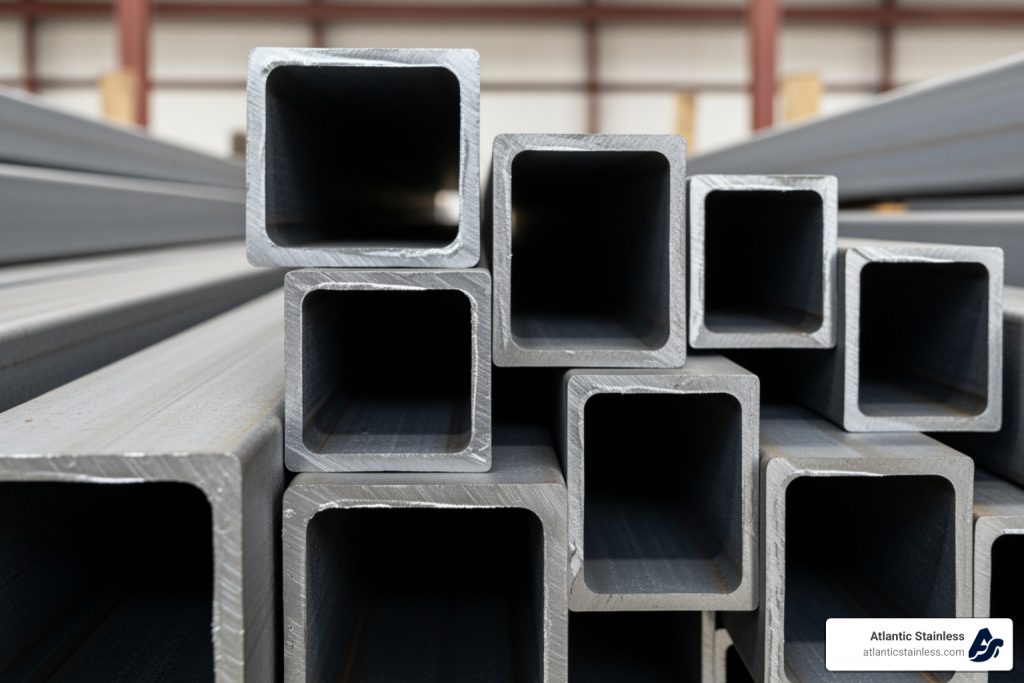
C channels (also called structural channels) have a distinctive U-shaped cross-section with a flat web and two flanges. That shape gives them excellent resistance to both vertical and horizontal loads, making them one of the most versatile structural profiles in construction and manufacturing.
Sizes range from very small bar channels at under 1 lb/ft all the way up to heavy structural shapes like the C15 x 50 at 50 lb/ft. The right size depends on your load requirements, material choice, and available stock lengths — all of which this guide covers in detail.
Understanding the C Channel Size Chart and Designations
When we look at a c channel size chart, we aren’t just looking at a list of random numbers. These charts are governed by strict industry standards, primarily those set by the American Institute of Steel Construction (AISC) and ASTM International (specifically ASTM A6). These standards ensure that when you order a C8 channel in Massachusetts, it has the exact same dimensions as one ordered halfway across the world.
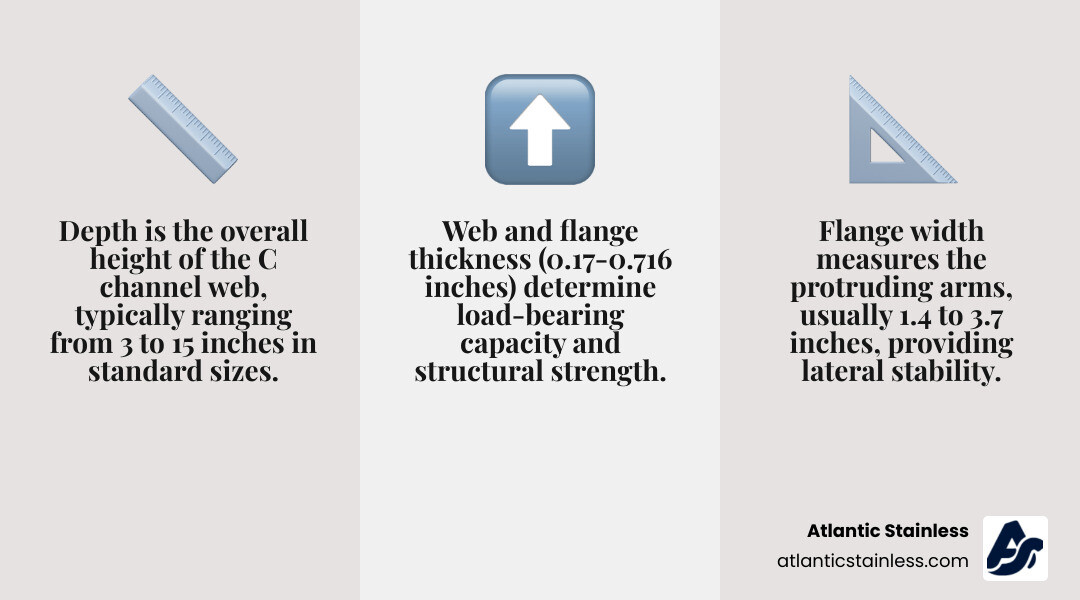
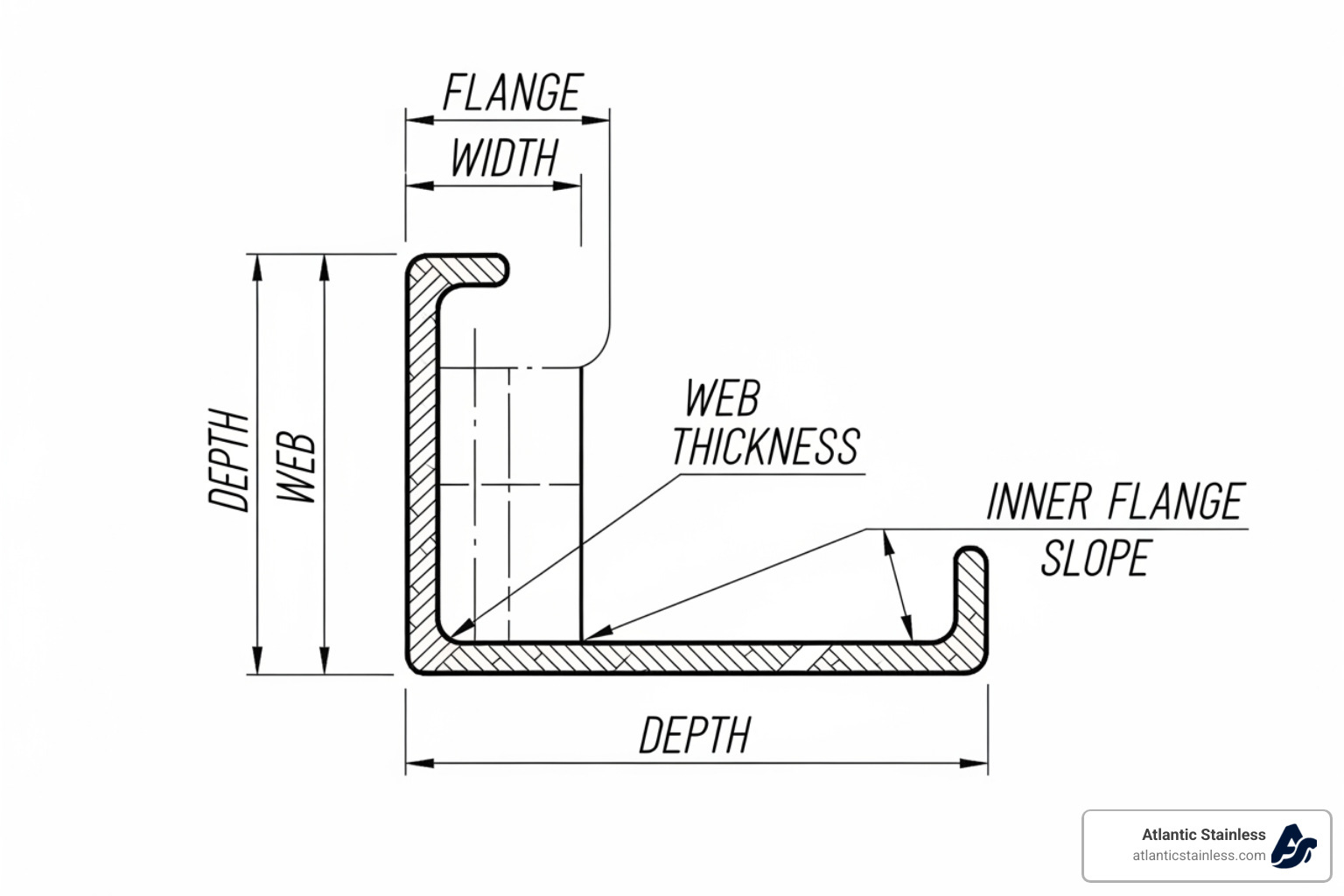
The anatomy of a C channel is defined by four main physical properties:
- Nominal Depth: The distance from the top of the upper flange to the bottom of the lower flange.
- Weight per Foot: How much a one-foot section of the channel weighs in pounds.
- Flange Width: The width of the horizontal “legs” of the U-shape.
- Web Thickness: The thickness of the vertical “backbone” of the channel.
Standard C vs. Miscellaneous MC Channels
It is important to distinguish between “C” channels and “MC” channels. While they look similar, their geometry differs significantly.
| Property | American Standard Channel (C) | Miscellaneous Channel (MC) |
|---|---|---|
| Flange Slope | Inner flange surface has a standard 16.67% slope. | Flanges are often parallel or have non-standard slopes. |
| Dimensions | Follows strict AISC standardized dimensions. | Offers a wider variety of specialized depths and weights. |
| Common Use | General structural framing and bracing. | Specialized applications like ship building or car frames. |
At Atlantic Stainless, we focus on providing the precise Channel profiles required for your specific engineering needs, whether they fall under standard structural or miscellaneous categories.
How to Read a C Channel Size Chart
Reading a c channel size chart is a skill every project manager should master. The designation format always follows the pattern: [Shape Letter] [Depth] x [Weight per Foot].
Take C12 x 20.7 as an example:
- C: Indicates it is an American Standard Channel.
- 12: The nominal depth is 12 inches.
- 20.7: The section weighs 20.7 pounds for every linear foot.
When you dive deeper into the technical data, you’ll also see measurements for the inner radius (the curve where the flange meets the web) and the cross-sectional area. These details are vital for calculating load-bearing capacity and ensuring the channel can withstand the stresses of your specific application.
Structural vs. Bar Channel Sizes
Not all C channels are created equal. We generally categorize them into two groups based on their size:
- Bar Size Channels: These are smaller profiles where the maximum dimension (the depth) is less than 3 inches. You might see a bar channel sized at 3/4″ x 3/8″ x 1/8″. These are typically used for light-duty framing, architectural trim, and decorative accents.
- Structural Shapes: These are channels with a depth of 3 inches or greater. These are the heavy hitters used in building frameworks, bridge supports, and industrial machinery.
If you are looking for specific structural components, exploring our Channel inventory will show you the vast range of sizes available for both heavy-duty and light-duty projects.
Material Differences: Stainless Steel and Other Materials
While the dimensions on a c channel size chart might look the same across different materials, the performance of those materials varies wildly. Selecting the right material involves balancing yield strength, weight, and environmental resistance.
- A36 Carbon Steel: The “workhorse” of the industry. It has a yield point of 36,000 psi and is excellent for welding and general construction. However, its corrosion resistance is poor, often requiring galvanizing or painting.
- Aluminum: Weighs about one-third as much as steel. It is prized for its high strength-to-weight ratio and natural resistance to rust, making it a favorite for the transportation and marine industries.
- Stainless Steel: The premier choice for harsh environments. It offers superior corrosion resistance, excellent thermal properties, and a clean aesthetic.
When deciding between these options, it’s helpful to view our full range of Beam & Channel products to compare how different alloys might suit your project’s longevity requirements.
Stainless Steel C Channel Size Chart and Properties
Stainless steel C channels are often required in industries where hygiene or chemical resistance is non-negotiable. At Atlantic Stainless, we supply these in several key grades:
- 304/304L: The most common stainless grade. It provides excellent corrosion resistance and is easy to weld and form. It is frequently used in food processing equipment and architectural applications.
- 316/316L: Known as “marine grade” stainless. It contains molybdenum, which gives it enhanced resistance to chlorides (like salt water) and acidic chemicals.
- Duplex Grades: For extreme structural needs, laser-fused duplex channels offer even higher yield strengths and resistance to stress corrosion cracking.
Our stainless products adhere to standards like ASTM A276 and ASTM A479, ensuring that the mechanical properties and tolerances meet the highest industrial benchmarks. For those needing specific horizontal support members, check out our Beam selection which complements our channel offerings.
Mechanical Properties and Engineering Specifications
When engineers look at a c channel size chart, they aren’t just looking at the size; they are looking at the “muscle” behind the metal. The mechanical properties dictate how the material will behave under pressure.
Key Mechanical Stats (A36 Steel Example):
- Yield Point: 36,000 psi (the point where the metal permanently deforms).
- Tensile Strength: 58,000 psi (the maximum stress the material can handle before breaking).
- Brinell Hardness: Approximately 133.
- Elongation: 20% in 2 inches (indicates the material’s ductility).
Fabrication Characteristics
One of the reasons C channels are so popular is their ease of fabrication.
- Welding: Most C channels, especially A36 and 304L stainless, have excellent welding characteristics.
- Machining: They can be drilled, milled, and turned with standard equipment.
- Forming: While structural channels are rigid, smaller bar channels can be bent or formed for custom architectural work.
Common Applications for Standard C Channel Sizes
The versatility of the C channel means you’ll find it almost everywhere you look in the built environment. Because the U-shape provides strength in multiple directions, it is ideal for:
- Building Frames: Used as lintels over doors and windows or as part of the primary structural grid.
- Vehicle Chassis and Trailers: The C10 and C12 sizes are common in truck beds and trailer frames because they provide high rigidity without the excessive weight of a solid beam.
- Solar Panel Mounts: Smaller C channels provide the perfect track for mounting solar arrays.
- Architectural Trim: Stainless steel bar channels provide a sleek, modern finish for glass railings and wall accents.
- Industrial Machinery: Used for base frames and protective housing for heavy equipment.
- Roof Purlins: In metal buildings, C channels act as the secondary framing that supports the roof panels.
Frequently Asked Questions about C Channel Dimensions
What is the difference between a C channel and an MC channel?
As we touched on earlier, the primary difference is the geometry. A “C” channel is an American Standard Channel with a specific 16.67% slope on the inside of the flanges. An “MC” channel stands for “Miscellaneous Channel” and can have different flange shapes, thicknesses, and non-standard depths. You cannot always swap one for the other in a blueprint because their weight and load-bearing properties differ.
How do I calculate the weight of a C channel per foot?
While you can use the c channel size chart to find the nominal weight, you can calculate the theoretical weight of custom pieces by determining the cross-sectional area and multiplying it by the density of the material (e.g., 0.284 lb/in³ for steel). However, for standard sizes, the designation (like the “20.7” in C12 x 20.7) tells you exactly what the weight is.
What are the standard stock lengths and tolerances for C channels?
In the United States, the most common stock lengths are 20 feet and 40 feet. At Atlantic Stainless, we understand that not every project needs a 20-foot stick of steel. That’s why we offer custom production cutting. Regarding tolerances, standard structural shapes typically have a length tolerance of +/- 1/4 inch, though this can vary based on the specific ASTM standard (like ASTM A6).
Conclusion
Navigating a c channel size chart is the first step in ensuring your project is built to last. Whether you are building a heavy-duty industrial platform or a delicate architectural feature, the dimensions you choose will dictate the strength, weight, and cost of your build.
At Atlantic Stainless, we pride ourselves on being more than just a supplier. We are a dedicated partner in your project’s success. From sourcing the perfect 316L marine-grade Channel to providing precision polishing and custom production cutting, our team has the expertise to help you decode the complexities of structural metal.
If you are ready to start your next project or need help selecting the right alloy and size for a specific load requirement, contact us today. We provide nationwide distribution from our North Attleboro, Massachusetts headquarters, ensuring that high-quality stainless steel is always within your reach.