The Definitive Guide to Stainless Steel Fittings
Why Stainless Steel Fittings Are Essential for Industrial Piping Systems
Last updated on May 20th, 2026 at 11:57 am
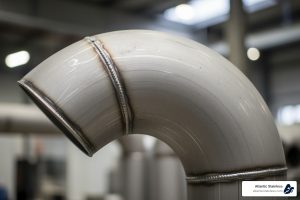
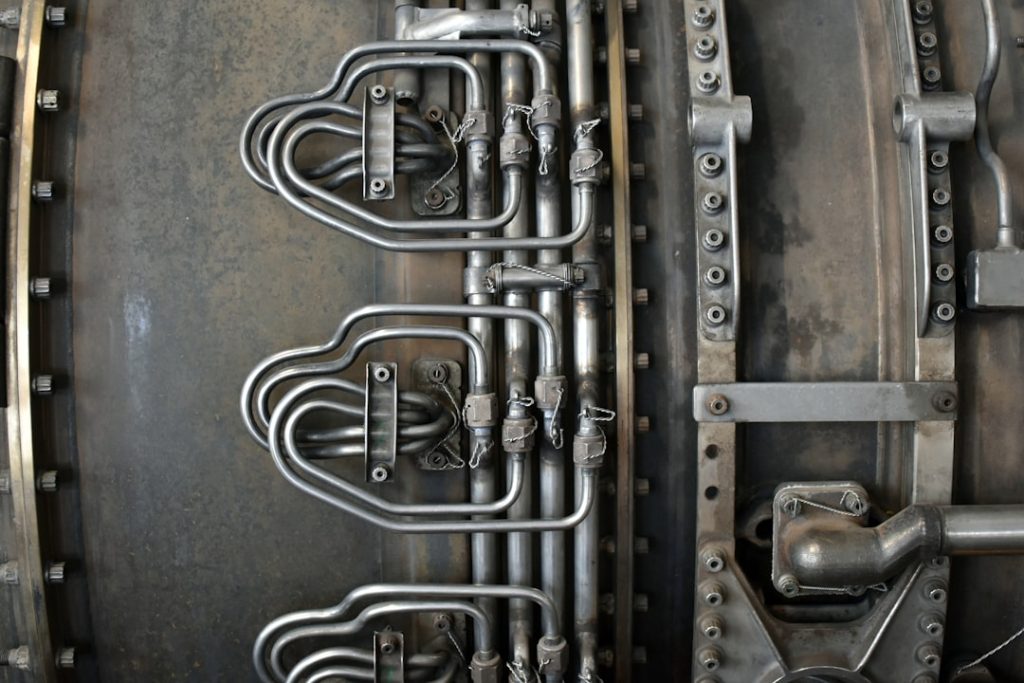
Stainless steel fittings are specialized components that connect pipes, tubes, and hoses in industrial piping systems, ensuring leak-proof, durable connections that withstand high pressure, extreme temperatures, and corrosive environments.
Quick Overview:
- What They Are: Components like elbows, tees, couplings, and adapters that join piping sections
- Key Types: Crimp fittings, reusable fittings, adapters, instrumentation fittings, weld-ons
- Common Grades: 304 (general use) and 316 (high corrosion resistance)
- Main Benefits: Superior corrosion resistance, decades-long lifespan, hygienic properties
- Applications: Food & beverage, pharmaceutical, chemical processing, water treatment, marine
The global stainless steel pipe fittings market was valued at $10.5 billion in 2022 and is projected to reach $17.8 billion by 2030, reflecting rising demand for reliable, long-lasting connections.
Whether you are a procurement professional, engineer, or contractor, understanding stainless steel fittings is critical. These components form the backbone of your piping infrastructure, and selecting the right type can mean the difference between a system that lasts decades and one requiring constant maintenance.
This guide covers the essentials: fitting types, grade selection, industry standards, and why working with a reliable supplier like Atlantic Stainless makes all the difference.
Understanding the Fundamentals: What Are Stainless Steel Fittings?
Stainless steel fittings are components that allow you to change direction, connect different pipe sizes, branch off lines, or terminate a pipe run. They handle significant pressure and temperature ranges while their corrosion resistance ensures long-term safety and hygiene.
For more information on the conduits these fittings connect, explore our resources on More info about stainless steel tubing.
Types of Stainless Steel Fittings
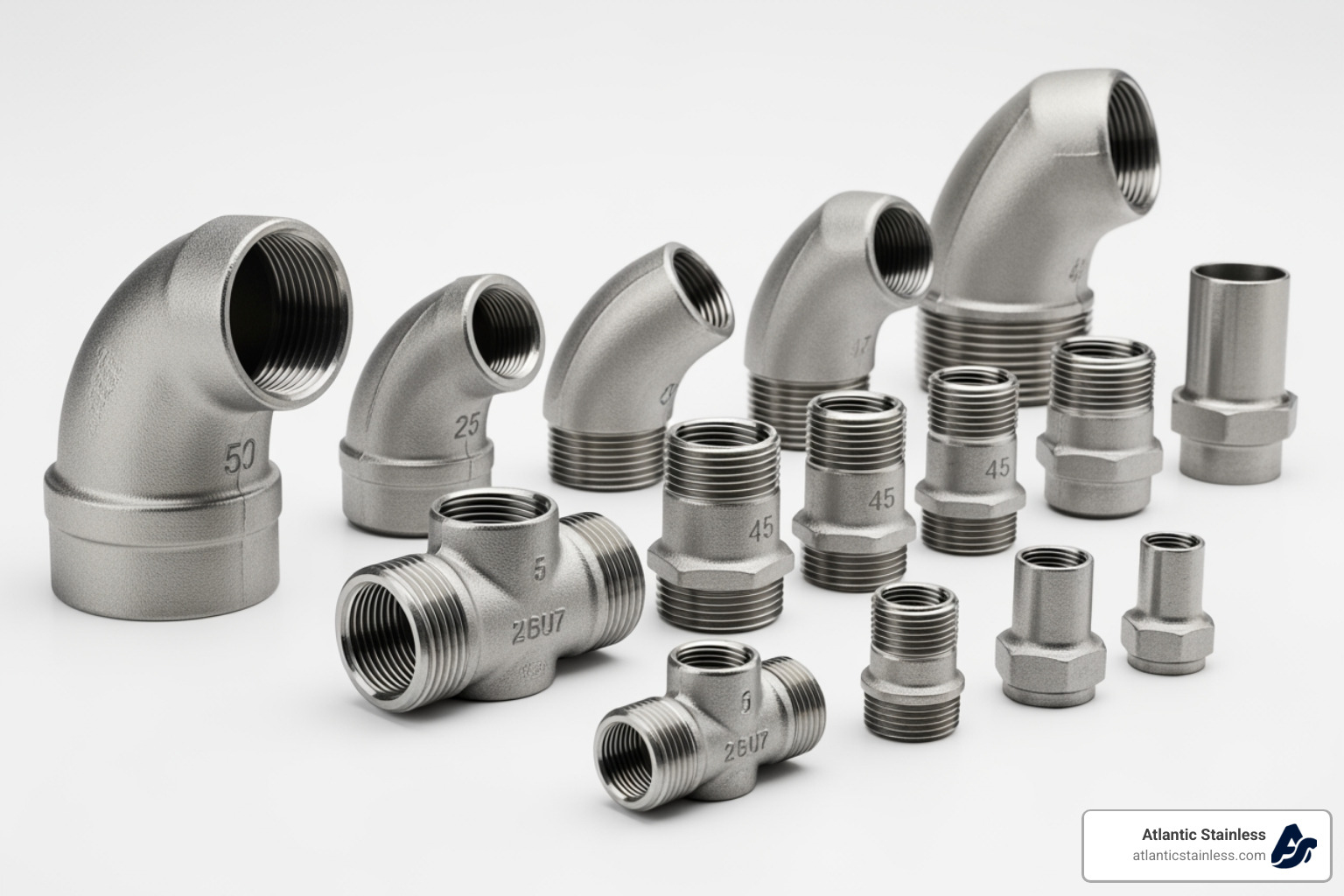
Common types include:
- Crimp Fittings: Create permanent seals by deforming the fitting, widely used in hydraulic systems
- Reusable Fittings: Can be disassembled and reused, offering flexibility for systems requiring modifications
- Adapters: Connect different fitting types, thread sizes, or connection methods
- Instrumentation Fittings: Precision-engineered for control systems and laboratories
- Hose Barb / Push-Ons: Feature barbed ends for quick hose assembly in lower-pressure applications
- Weld-On Fittings: Permanently welded for strong, leak-resistant connections in high-pressure processes
The Importance of Seamless vs. Welded Construction
Seamless fittings are formed from a single piece of stainless steel, providing high strength and integrity for high-pressure or corrosive applications.
Welded fittings are fabricated from plates or tubes welded together. While modern welding is advanced, these fittings offer greater flexibility in size and shape at more economical prices for general-purpose applications.
For more insights, read about Seamless vs. Welded Tubing: What’s the Difference?.
The Best Advantages of Stainless Steel
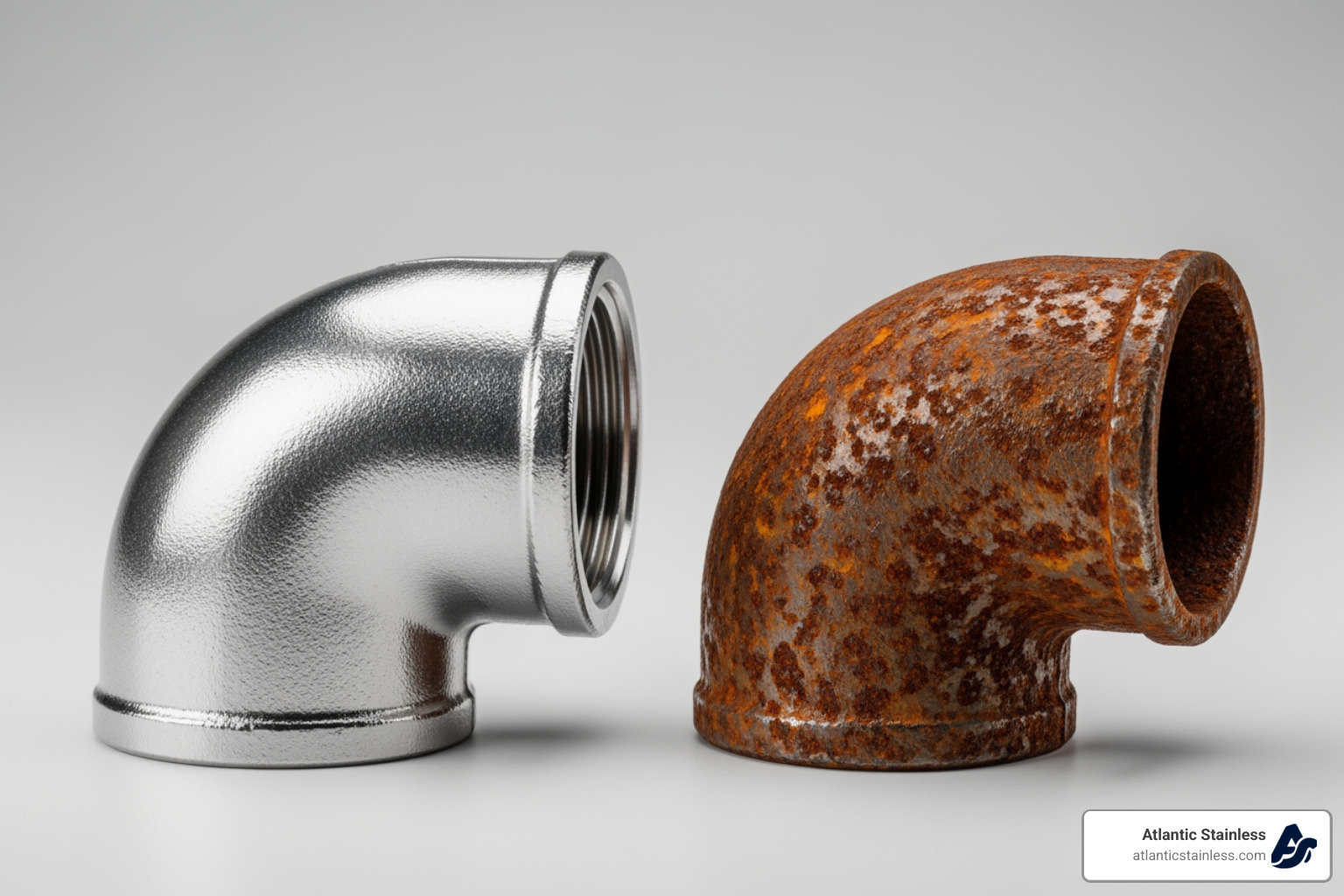
Superior Durability and Longevity
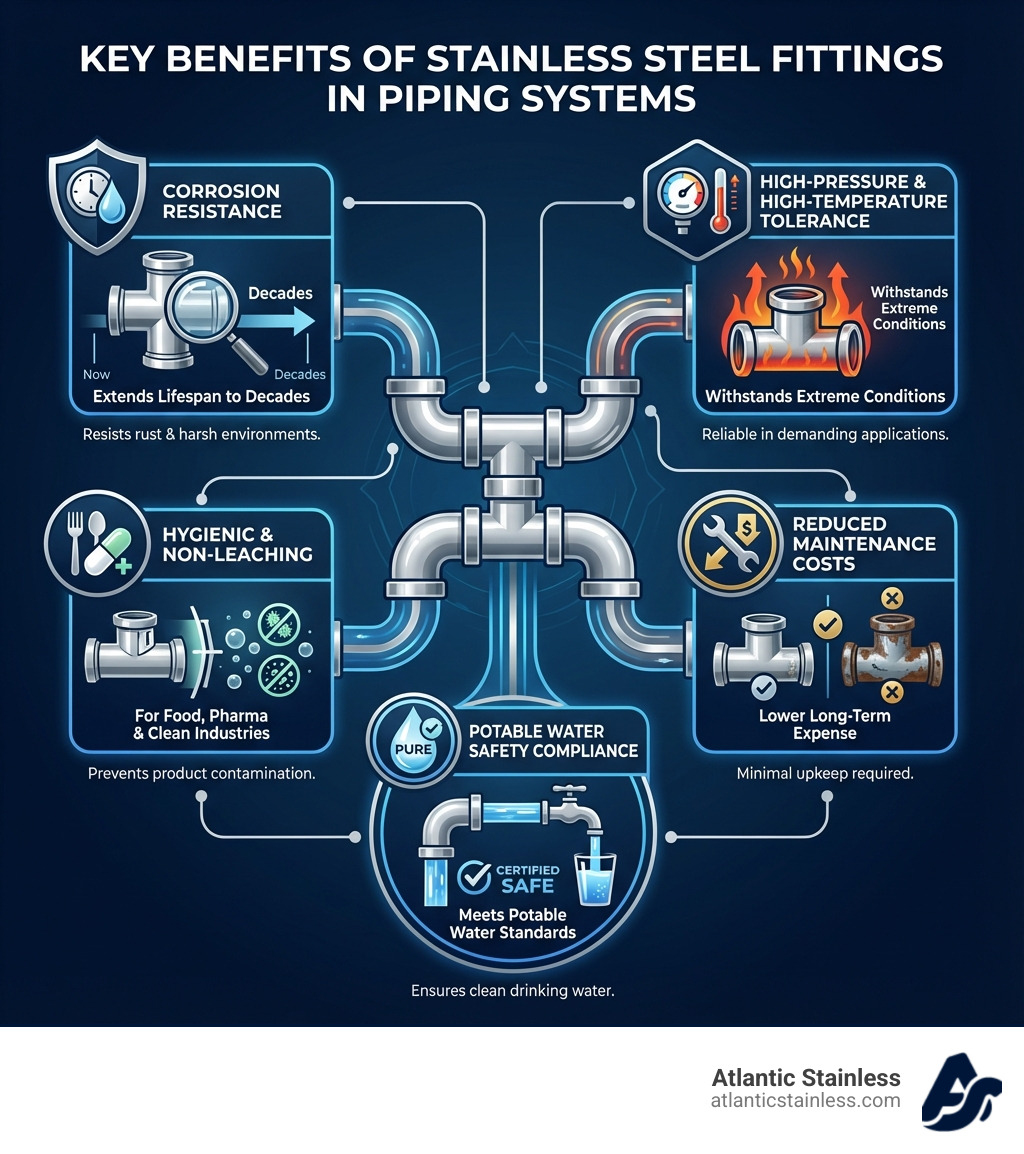
- Corrosion Resistance: Chromium content forms a passive layer resisting rust and corrosion, maintaining integrity for decades. Grades 304 and 316 excel in chloride-rich or acidic conditions.
- High-Temperature Strength: Retain strength at liftd temperatures unlike plastics or other metals
- Pressure Tolerance: Withstand high internal pressures without deforming
- Reduced Lifecycle Cost: Require less frequent replacement and maintenance
Improved Safety and Purity
- Hygienic Properties: Smooth, non-porous surface resists bacterial growth and is easy to sterilize
- Food & Beverage Safety: Non-reactive and non-leaching, maintaining product purity
- Pharmaceutical Purity: Inert nature minimizes interaction with sensitive compounds
- Potable Water Compliance: Comply with 2014 Federal Safe Drinking Water Act
- Fire Resistance: Maintain structural integrity at high temperatures
Cost-Effectiveness and Low Maintenance
- Reduced Replacement Frequency: Can last decades, cutting material and labor costs
- Lower Maintenance Costs: Robust nature means less spent on inspections and repairs
- Strength Reduces Bracketing Requirements: Inherent rigidity reduces need for supports, simplifying installation
Navigating Grades, Standards, and Quality Assurance
Understanding Stainless Steel Grades and Classes
Common grades for stainless steel fittings:
- Austenitic (300 Series):
- Grade 304: General-purpose “18/8” steel with good corrosion resistance
- Grade 316: Contains molybdenum for superior resistance to chlorides and acids
- Ferritic/Martensitic (400 Series): Good strength and wear resistance
- Duplex Grades: Combine austenitic and ferritic properties for higher strength
Fittings also have pressure ratings (like 150#) and schedules (S5, S10, S40, S80, XH, S160, XXH) defining wall thickness. Visit our Stainless Steel Grades, 300 Series, and 400 Series pages for details.
Key Industry Standards
ASTM A403/A403M-22 is the prominent standard for wrought austenitic piping fittings, defining:
- “WP” and “CR” Designations: Relate to ASME/MSS dimensional requirements
- Class Designations: Specify seamless/welded construction and examination levels
- Nondestructive Examination (NDE): Inspect for internal flaws without damage
Review the full Standard Specification for Wrought Austenitic Stainless Steel Piping Fittings.
The Importance of Heat Code Traceability
Each steel batch receives a unique heat code providing:
- Material Origin Verification: Records production source
- Chemical Composition Proof: Mill test reports document composition and properties
- Ensuring Compliance: Demonstrates specification compliance
- Problem Resolution: Enables rapid batch identification for issues
Heat code traceability functions like DNA for stainless steel fittings, providing quality transparency.
How to Choose the Right Fitting for Your Application
Key Selection Criteria
- Application Requirements: Function determines fitting type (elbow, tee, reducer)
- Pressure: Maximum operating pressure must match fitting ratings (150#, 3000#)
- Temperature: Operating range may favor specific grades or processes
- Fluid Type: Different fluids present varying compatibility considerations
- Corrosive Environment: Marine applications require improved corrosion resistance
| Grade | Corrosion Resistance | Cost | Common Applications |
|---|---|---|---|
| 304 | Good general-purpose, susceptible to chlorides | More affordable | Food/beverage, architectural, general industrial |
| 316 | Superior, especially against chlorides and acids | Higher, but more durable | Marine, chemical, pharmaceutical, medical |
- Sizing and Dimensions: Must match pipe OD, ID, and wall thickness
- Compatibility: All components must be chemically and physically compatible
Common Applications
- Food & Beverage: Hygienic surface prevents bacterial growth
- Pharmaceutical & Medical: Inert, corrosion-resistant for sensitive compounds
- Chemical & Petrochemical: Handle aggressive chemicals and extreme conditions
- Water Treatment: Durable and compliant with drinking water standards
- Marine: Resist saltwater and harsh weather
- Architectural: Aesthetic appeal and durability
See Stainless Steel Tubing: Many Applications for more uses.
Sourcing Your Fittings: The Value of a Reliable Supplier
Choosing the right supplier is as critical as selecting the right fitting. At Atlantic Stainless, we focus on extensive inventory, rapid delivery, and deep expertise. Learn more in our guide on Choosing the Best Stainless Steel Pipe Suppliers.
The Benefits of Prompt Delivery and Customization
- Same-Day Shipping: Available on 90% of our in-stock stainless steel fittings, reducing downtime
- Reduced Downtime: Prompt delivery minimizes interruptions when critical fittings are needed
- Project Efficiency: Broad inventory enables confident planning without long lead times
- Custom-Made Fittings: We fabricate specialized fittings for unique applications. Explore our SS Tubing & Fittings for Custom Applications
Atlantic Stainless is a nationwide supplier and processor of high-quality stainless steel and high-temperature alloys, with locations including North Attleboro, Massachusetts, USA, serving as hubs for efficient product delivery and service.
Conclusion
Stainless steel fittings support the safety, efficiency, and longevity of industrial piping systems through their durability, corrosion resistance, hygienic properties, and performance under demanding conditions.
From ASTM A403 standards to heat code traceability, quality stainless steel fittings ensure consistency and reliability. Understanding grades like 304 and 316 and aligning them with pressure, temperature, and fluid requirements is central to sound system design.
The right stainless steel fittings reduce maintenance, minimize downtime, protect product purity, and lower total cost of ownership. Working with a reliable supplier like Atlantic Stainless, offering extensive inventory, prompt delivery, and custom fabrication, ensures your projects are supported with suitable materials and expertise.