Unlock the Secrets of Cutting Stainless Steel Plate Like a Pro
Why Stainless Steel Plate Cutting Requires the Right Approach
Last updated on May 28th, 2026 at 01:17 pm
Stainless steel plate cutting is fundamentally different from cutting other metals. Its high chromium content creates a protective layer that makes it corrosion-resistant but also harder, more abrasive, and prone to work-hardening under pressure. This means it demands the right tools and techniques.
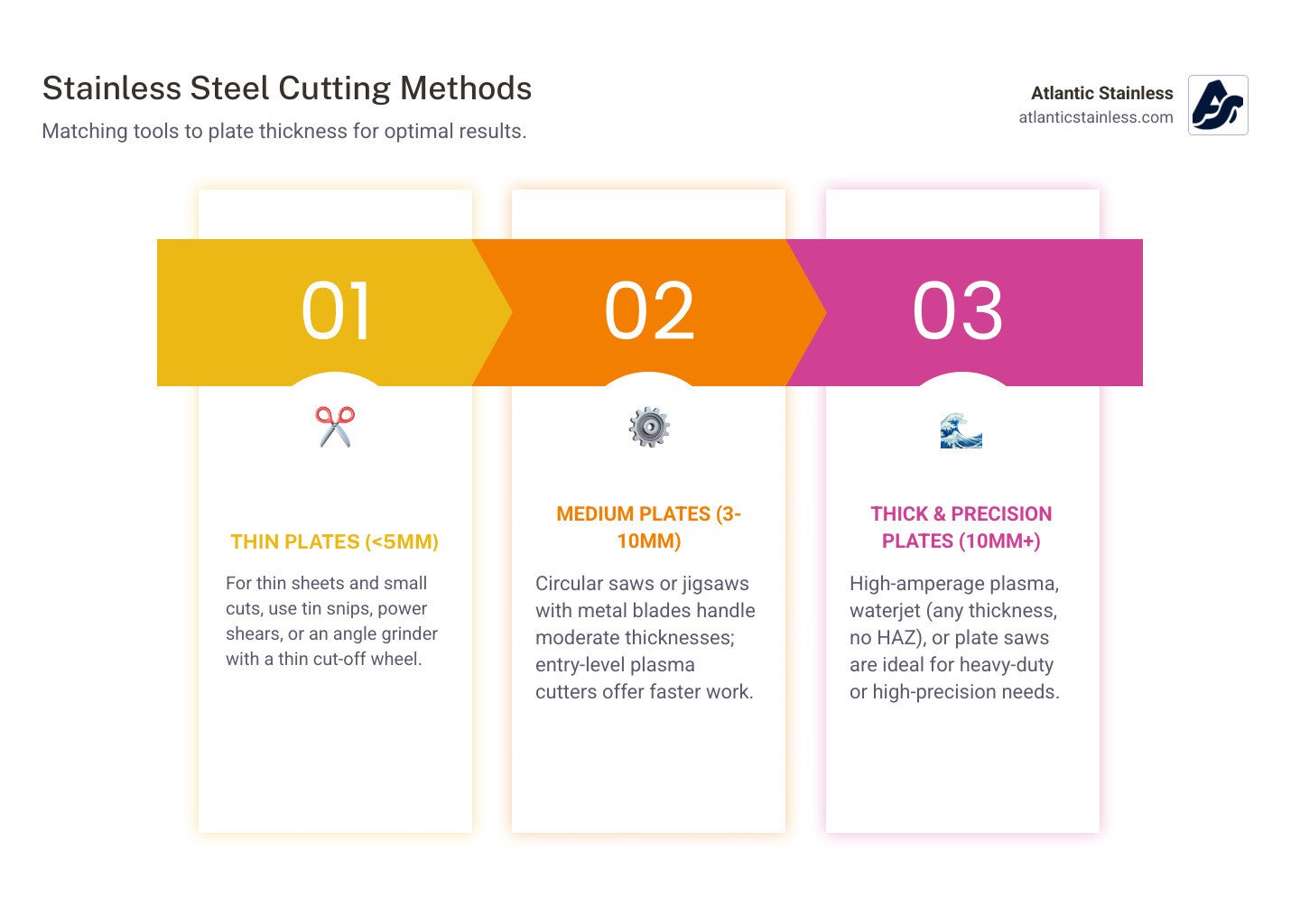
Quick Answer: Best Methods for Cutting Stainless Steel Plate
| Thickness | Recommended Method | Best For |
|---|---|---|
| Under 1.5mm | Tin snips or power shears | Thin sheets, simple cuts |
| 2-5mm | Angle grinder with cut-off wheel | Straight cuts, small projects |
| 3-10mm | Circular saw or jigsaw (metal blade) | Moderate thickness, DIY work |
| 10mm+ | Plasma cutter (50-60 amps) | Thick plates, faster cuts |
| Any thickness | Waterjet cutting | No heat distortion, highest precision |
| 0.5″+ thick | Plate saw cutting | Cold process, long strips |
The material’s hardness (around 200 HBW) and tensile strength (485 MPa) mean standard tools won’t work, and even metal-cutting tools wear down faster. Stainless steel also heats up quickly, which can lead to discoloration, warping, or damage to its corrosion-resistant properties.
Choosing the wrong method can ruin expensive material, damage tools, and create safety hazards. This guide covers essential safety, effective cutting methods for different thicknesses, and techniques for achieving clean, precise cuts.
Understanding the Material and Essential Safety
Before cutting, understand the material and the necessary safety practices.
What Makes Stainless Steel Challenging to Cut?
Unlike mild steel, stainless steel contains at least 10.5% chromium, which forms a protective oxide layer that resists rust and corrosion. You can learn more about its properties here. This protective quality, however, creates several cutting challenges:
- Hardness: Stainless steel is harder than mild steel (around 200 HBW), putting more stress on cutting tools and requiring specialized blades and slower speeds.
- Abrasive Resistance: Its robust nature wears down standard tools quickly. High-performance coated tools are needed to extend service life.
- Work-Hardening: During cutting, the material hardens in the stressed area. This increases tool abrasion and can make cutting inefficient if not managed correctly.
These factors mean tools for mild steel are often unsuitable. It’s also crucial to Choose the Right Stainless Steel Plate Grade for your project.
Non-Negotiable Safety Precautions
Metal cutting involves significant risks from sparks, heat, and sharp edges. Prioritizing safety is essential.
Here is the essential safety gear and workspace setup:
- Personal Protective Equipment (PPE):
- Safety Glasses and Face Shield: Protects eyes and face from flying debris and sparks. A full face shield is crucial with angle grinders or plasma cutters.
- Cut-Resistant Gloves: Protects hands from sharp edges and hot metal.
- Ear Protection: Prevents hearing damage from loud cutting noise.
- Long Sleeves and Pants: Wear flame-resistant clothing to protect skin from sparks. Avoid loose clothing.
- Work Area Safety:
- Ventilation: Ensure adequate ventilation to prevent inhaling fumes and metallic dust.
- Fire Extinguisher: Keep a fire extinguisher nearby, as sparks can cause fires. Clear flammable materials from the area.
- Securing the Workpiece: Always clamp the material securely to a workbench. A stable workpiece is safer and ensures an accurate cut.
Following these precautions significantly reduces the risks of stainless steel plate cutting.
A Guide to Stainless Steel Plate Cutting Methods
Choosing the right cutting method depends on material thickness, desired precision, and the type of cut. We’ll explore common methods, from handheld tools to industrial solutions.
Choosing Your Tool: A Comparative Overview
This table provides a snapshot of popular stainless steel plate cutting methods:
| Method | Ideal Thickness | Precision | Speed | Cost (Tool/Operation) | Heat Affected Zone (HAZ) |
|---|---|---|---|---|---|
| Angle Grinder | 2-5mm (sheets, rods, bars) | Low to Medium | Medium | Low / Medium | High |
| Jigsaw | Up to 3mm (thin sheets) | Medium | Low | Low / Medium | Medium |
| Plasma Cutter | 0.5 – 3 inches (thick plates) | Medium | High (20-300 ipm) | Medium / Medium | Low |
| Waterjet Cutting | Up to 10+ inches (any) | Very High (±0.003″) | Medium | High / High | None |
| Laser Cutting | Up to 0.5 inches (thin gauge) | Very High (±0.001″) | High (20-120 mm/s) | High / Medium | Very Low |
| Circular Saw | Up to 6mm (~0.5 inch) | Medium | Medium | Low / Medium | Medium |
| Plate Saw Cutting | 0.5 – 26 inches (thick plates) | Medium to High | Medium | Medium / Low | None (cold process) |
| Tin Snips | Up to 0.8mm (thin sheets) | Low | Low | Very Low / Very Low | None |
Each method has its own nuances, which we’ll explore next.
Method 1: Angle Grinder
The angle grinder is a versatile, portable tool for smaller projects or rough cuts.
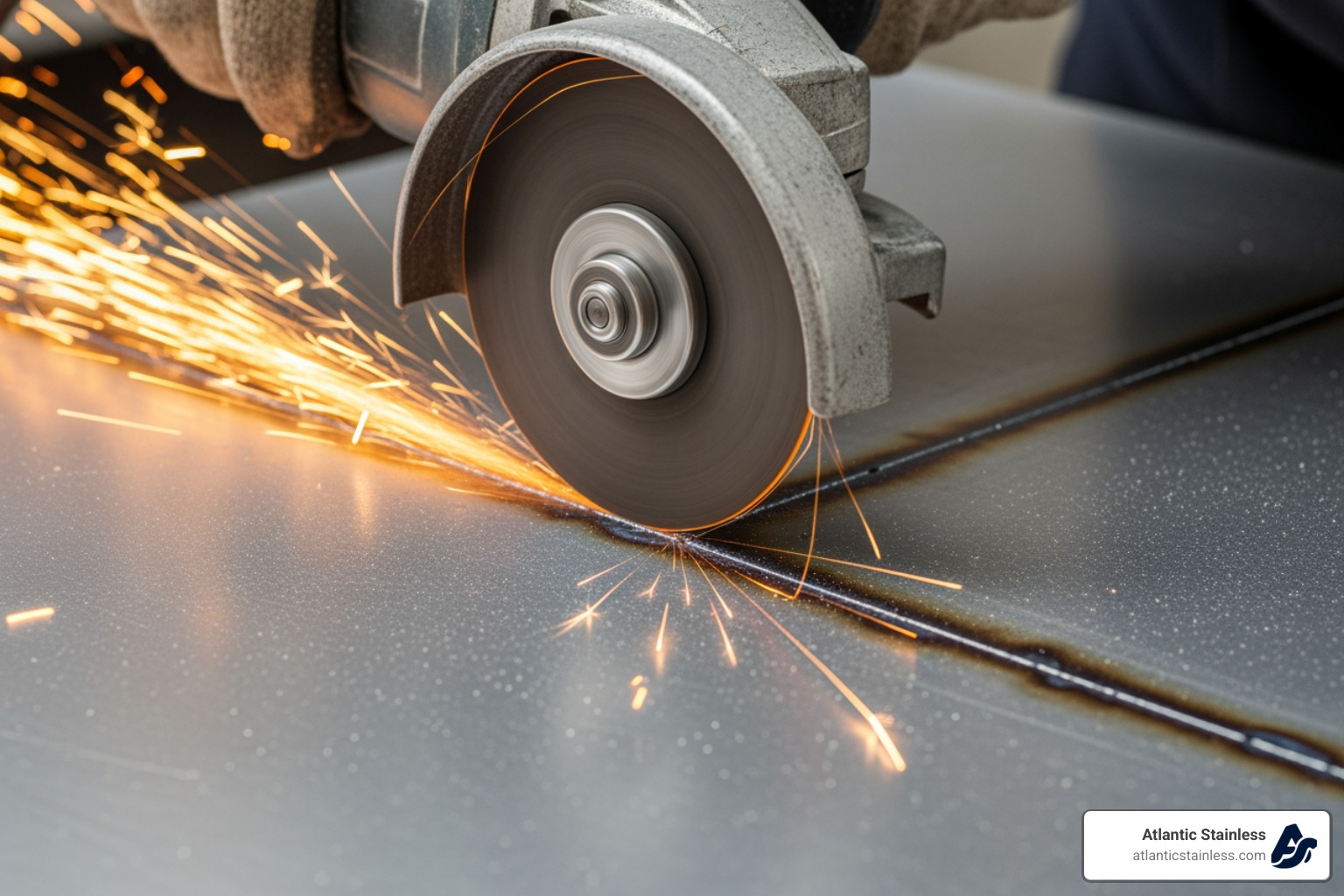
- Best for: Straight cuts and trimming plates from 2-5mm thick.
- Technique:
- Use a thin cut-off wheel designed for stainless steel to reduce heat and friction.
- Let the tool do the work; avoid forcing it to prevent kickback and overheating.
- Take breaks on longer cuts to allow the material and wheel to cool, preventing discoloration.
- Advantages: Portable, inexpensive, and effective for various shapes.
- Disadvantages: Generates significant heat and sparks, offers lower precision, and can cause discoloration.
Method 2: Jigsaw or Circular Saw
For thinner sheets or more controlled cuts, a jigsaw or circular saw is an excellent choice.
- Best for: Jigsaws are ideal for intricate cuts in sheets up to 3mm thick. Circular saws are best for straight cuts in material up to 6mm.
- Blade Selection: Use bi-metal blades with a high TPI (21-24) for jigsaws. For circular saws, use carbide-tipped metal-cutting blades.
- Technique:
- Use a slower speed to reduce heat buildup and prevent work-hardening.
- Apply cutting fluid or lubricant to reduce friction and extend blade life.
- Clamp the material firmly to a workbench to ensure accuracy and safety.
- Advantages: Jigsaws offer versatility for shapes; circular saws provide precise straight cuts.
- Disadvantages: Slower than plasma, can generate heat, and require specific blades.
Method 3: Plasma Cutter
When speed is a priority for thicker stainless steel, a plasma cutter is invaluable.
- Best for: Fast, clean cuts on thick plates (0.5 to 3 inches), for both straight lines and curves.
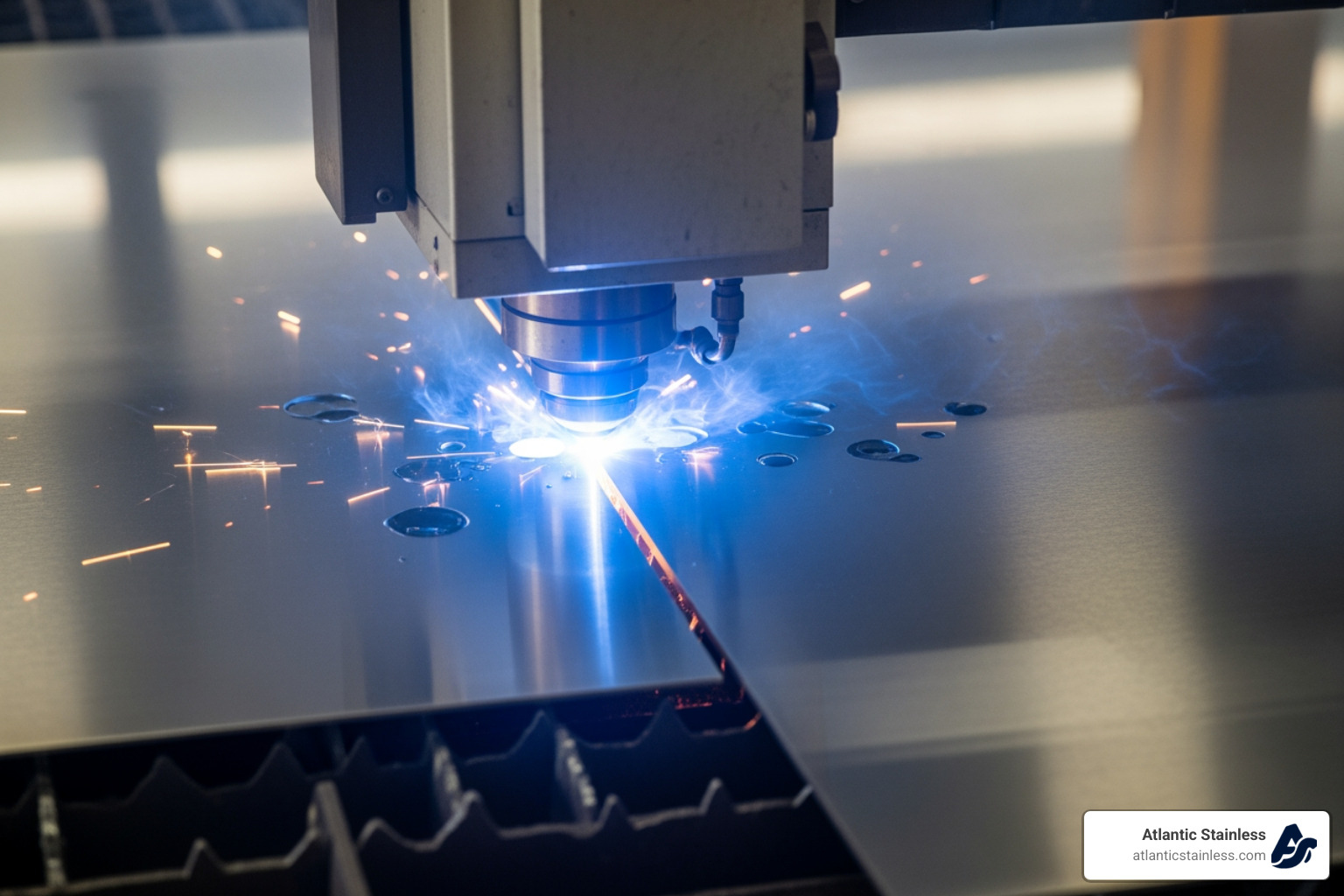
- How it Works: A plasma cutter uses a high-temperature arc of ionized gas to melt and blow away the metal.
- Considerations:
- Amperage: Match the amperage to the material thickness (e.g., 40-60 amps for plates 0.375 inches or greater).
- Air & Gas: Requires a supply of compressed air (60-120 PSI) and specific gases (like nitrogen or F5/H35) depending on thickness.
- Dross: Some molten metal (dross) may re-solidify on the edge, requiring post-cut cleaning.
- Advantages: Very fast, versatile across thicknesses, and creates a minimal heat-affected zone.
- Disadvantages: Requires a power source and air compressor, is less precise than laser or waterjet, and generates heat and fumes.
Achieving a Perfect Finish and Avoiding Common Issues
Making a clean cut while preserving the integrity of the stainless steel requires attention to detail.
How to Get Clean, Precise Cuts
Professional-looking stainless steel plate cutting starts with careful preparation and execution.
- Marking Lines: Use a carbide scriber or apply masking tape and mark on it for clear, protected lines.
- Securing the Workpiece: Always use C-clamps or a vise to firmly secure the material. This prevents vibration, ensuring accuracy and safety.
- Tool Control: Let the tool do the work. A steady, even pace prevents work-hardening and results in smoother edges.
- Using Lubricants: Apply cutting fluid or oil to the cut line to reduce friction, dissipate heat, and extend tool life. This is essential for clean cuts on thicker material.
Preventing Discoloration and Oxidation
Discoloration, or “heat tint,” occurs when high temperatures cause the chromium to react with oxygen, compromising the protective layer.
- Heat Management: This is the primary defense. Use slower speeds with mechanical saws, take cooling breaks, and use cutting fluids. A water spray can also help keep the temperature down.
- Inert Gas Shielding (for thermal cutting): For thermal methods like plasma or laser, using an inert gas (like nitrogen) shields the cut from oxygen, preventing oxidation.
- Post-Cut Cleaning Techniques: After cutting, clean the surface to remove contaminants. For restoring maximum corrosion resistance, a process called passivation is used. This chemical treatment (often involving a nitric acid bath) rebuilds the protective chromium oxide layer.
Deburring and Smoothing Edges
After cutting, edges often have sharp burrs that must be removed for safety and a professional finish.
- Tools: We use a deburring tool, metal file, or a grinder with a flap disc.
- Process: Work along the cut edge with smooth, even strokes to remove all sharp fragments. This improves safety and the durability of the part.
- Safety First: Always wear your cut-resistant gloves and safety glasses during deburring.
DIY vs. Professional: When to Use Cutting Services
While many stainless steel plate cutting tasks can be done with handheld tools, DIY methods have limitations that often make professional services a better choice.
Limitations of Handheld Tools
Handheld tools offer flexibility but have clear boundaries:
- Thickness Limits: Tools like tin snips, angle grinders, and circular saws are only effective on thinner materials (generally under 6mm).
- Precision and Tolerance Issues: Achieving high precision and tight tolerances is nearly impossible with handheld tools, which are better suited for rough cuts.
- Risk of Material Warping: The heat generated by friction can easily warp thinner plates, leading to wasted material.
- Finish Quality: Handheld methods often leave rough edges that require extensive deburring and finishing.
For projects demanding high accuracy, thick materials, or large volumes, DIY methods are insufficient.
Advanced Industrial Stainless Steel Plate Cutting Services
When your project demands precision, speed, or the ability to cut thick material without compromising its properties, professional services are the optimal choice. At Atlantic Stainless, we use state-of-the-art equipment for superior results.
- Waterjet Cutting Services: This versatile method uses a high-pressure stream of water and abrasive to cut any thickness of stainless steel.
- Advantages: It introduces no heat, preventing distortion or discoloration, making it perfect for heat-sensitive materials. It can cut steel over 10 inches thick with high precision (tolerances around ±0.003 inches).
- Hi-Def Plasma Cutting Services: Industrial high-definition plasma systems are incredibly fast and efficient for thicker plates (0.5 to 3 inches).
- Advantages: This is a quick, affordable option that delivers clean, straight cuts with minimal distortion.
- Plate Saw Cutting Services: As a cold process, saw cutting is excellent for any grade of stainless steel plate, especially for very thick plates and long strips.
- Advantages: We can saw cut plates up to 26 inches thick and 312 inches long without introducing heat-related issues.
- Shearing Services: For thinner sheets (up to 12mm), shearing is a fast and cost-effective method for creating clean, straight cuts without thermal impact.
Advanced CNC machines like laser and waterjet offer unparalleled precision, while hi-def plasma and plate saws provide speed and capability for thick materials, offering better long-term value through efficiency and quality.
Frequently Asked Questions about Stainless Steel Plate Cutting
Here are answers to some common questions we receive about stainless steel plate cutting.
How does the thickness of the stainless steel sheet influence the choice of cutting method?
Thickness is the most critical factor.
- For very thin sheets (under 1.5mm): Manual tools like tin snips or power shears work for simple cuts. Jigsaws or lasers are great for intricate shapes.
- For medium thicknesses (2mm to 10mm): An angle grinder (2-5mm) or a circular saw with a carbide-tipped blade (up to 6mm) are good options. Plasma cutters become viable for faster cuts in this range.
- For thick plates (over 10mm, or 0.5 inches): Plasma cutting is excellent for its speed on plates up to 3 inches thick. For extreme thicknesses (over 10 inches) or when no heat is allowed, waterjet cutting is ideal. Plate saw cutting is a cold process perfect for material from 1/2 inch to 26 inches thick.
As thickness increases, the methods shift from mechanical to more powerful thermal or abrasive processes.
What is the best way to cut stainless steel without causing discoloration?
Preventing discoloration (heat tint) involves minimizing heat and protecting the cut from oxygen.
- Cold Cutting: Waterjet cutting is the best method as it generates no heat.
- Heat Management: For other methods, use slower speeds, take cooling breaks, and apply cutting fluids.
- Inert Gas Shielding: During plasma or laser cutting, using an inert gas like nitrogen shields the molten metal from oxygen, preventing oxidation.
- Post-Cut Cleaning and Passivation: After cutting, thorough cleaning and a chemical passivation process can restore the protective chromium oxide layer, ensuring full corrosion resistance.
Can I use the same tools to cut both mild steel and stainless steel?
While some tools can cut both, we recommend using tools specifically designed for stainless steel. Stainless steel is harder, more abrasive, and prone to work-hardening, which wears out general-purpose metal cutting tools quickly. Using blades rated for stainless steel ensures better cut quality, tool longevity, and safety. Woodworking tools should never be used.
Conclusion
Mastering stainless steel plate cutting is about understanding the material, prioritizing safety, and selecting the right tool for the job. We’ve explored everything from handheld options for light work to advanced industrial services. Remember these key takeaways: always wear appropriate PPE, secure your workpiece, manage heat to prevent discoloration, and choose tools suited to the thickness and precision required.
For projects that demand the utmost precision, specific stainless steel grades, or require significant volume, professional cutting services are the best choice. Our state-of-the-art equipment and experienced team at Atlantic Stainless are equipped to handle your most challenging requirements, ensuring clean, precise cuts without compromising material integrity.
Contact us for a quote on your next project or explore our Plate Saw Cutting services.